MACH Timeline
Events are ordered newest first. This record separates completed tests, failed attempts, scrubs and design changes from RPG's early engine work through Seraphina. Measurements with known timing, calibration or sensor faults are labelled as limited.
- 2026 · Seraphina
-
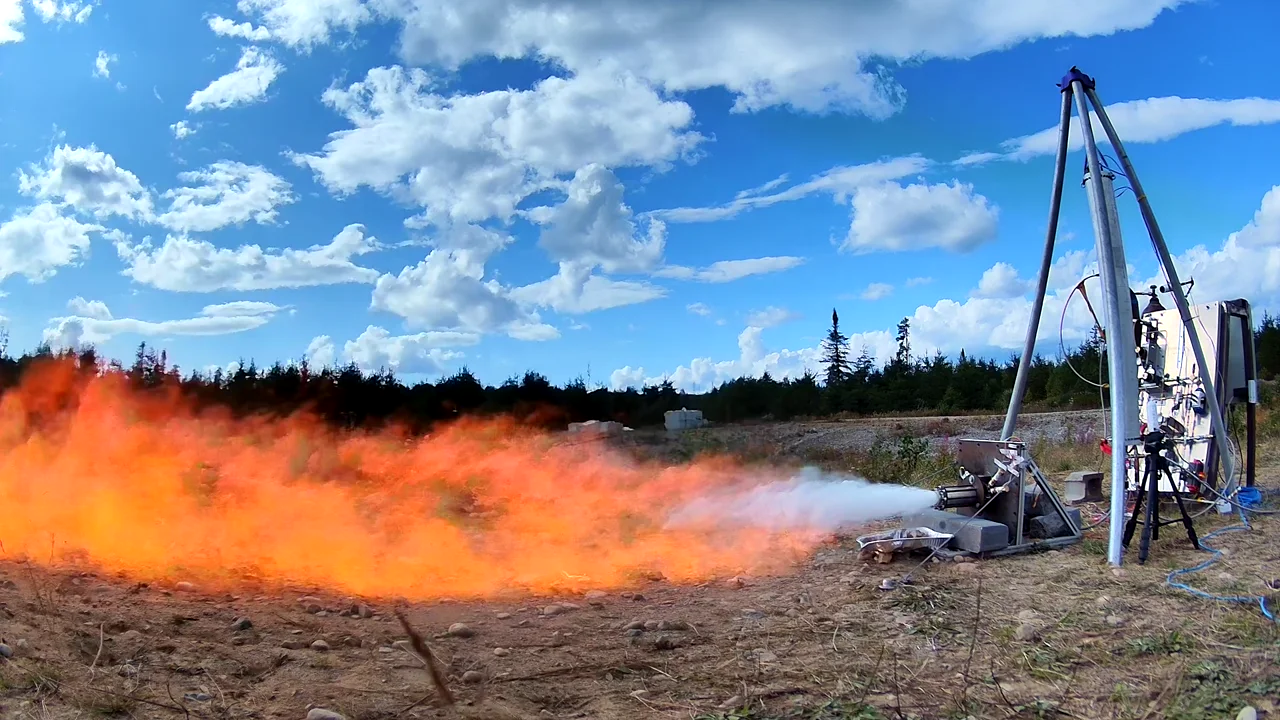
Seraphina relight test
Seraphina completed a remotely commanded relight. The first hotfire was intentionally shut down, chamber pressure returned to ambient, and the engine was then commanded through a second hotfire without physical servicing or personnel approaching the system.
Video, telemetry and test data -
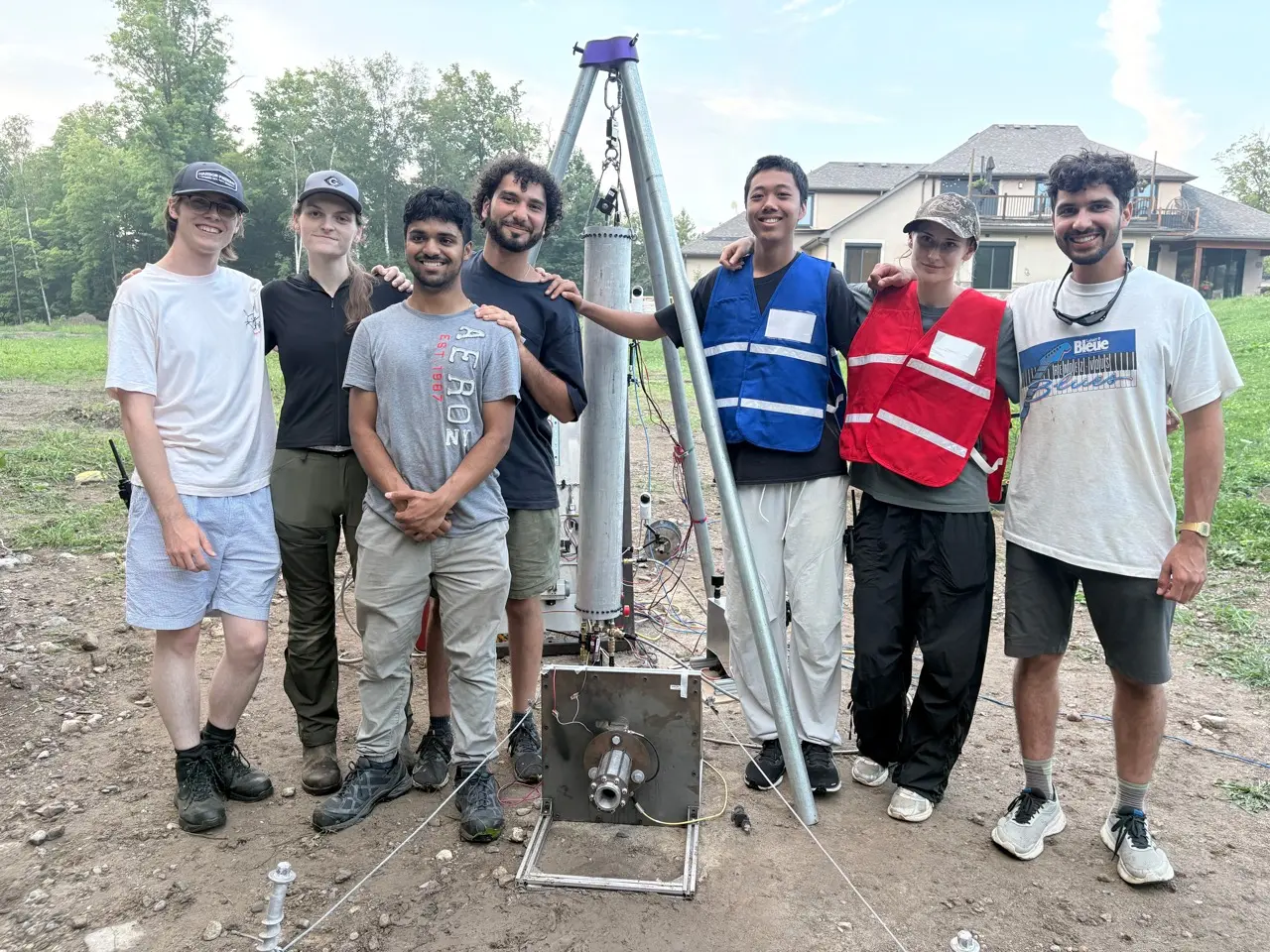
Seraphina hot-fire campaign
The first attempt did not ignite after an e-match continuity failure; its 172.11 N reading is only a load-cell signal. The second attempt burned for a reported 8.2 seconds, reaching 254.36 psi chamber pressure and 1,233.28 N peak thrust. The igniter cartridge plug failed during the run, followed by a loss of chamber pressure and thrust.
Seraphina test page -
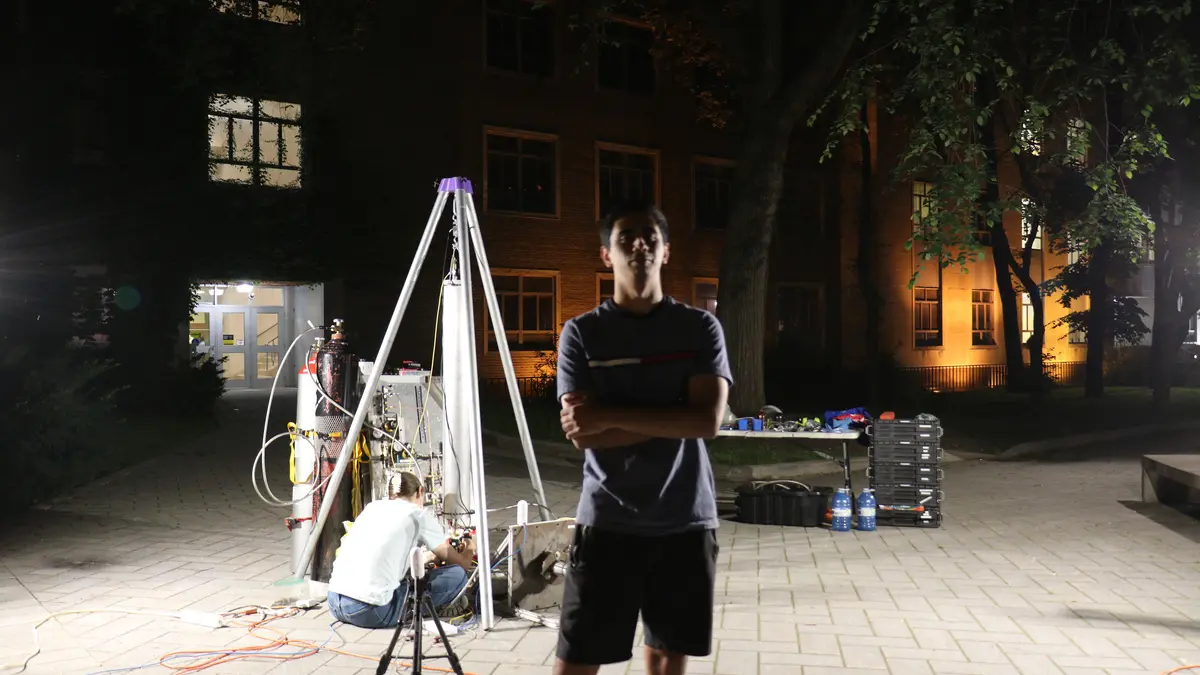
Cold flow and subsystem checks
The July 16 integrated water flow exposed leaking NPT plugs and a swage fitting, a short oxidizer hose, reversed V3 actuator and incorrect servo ranges. A July 25 low-pressure check passed. Several mini cold flows were later reported, but no count, run log, telemetry or pass criteria were preserved.
Photos, faults and corrective checks -
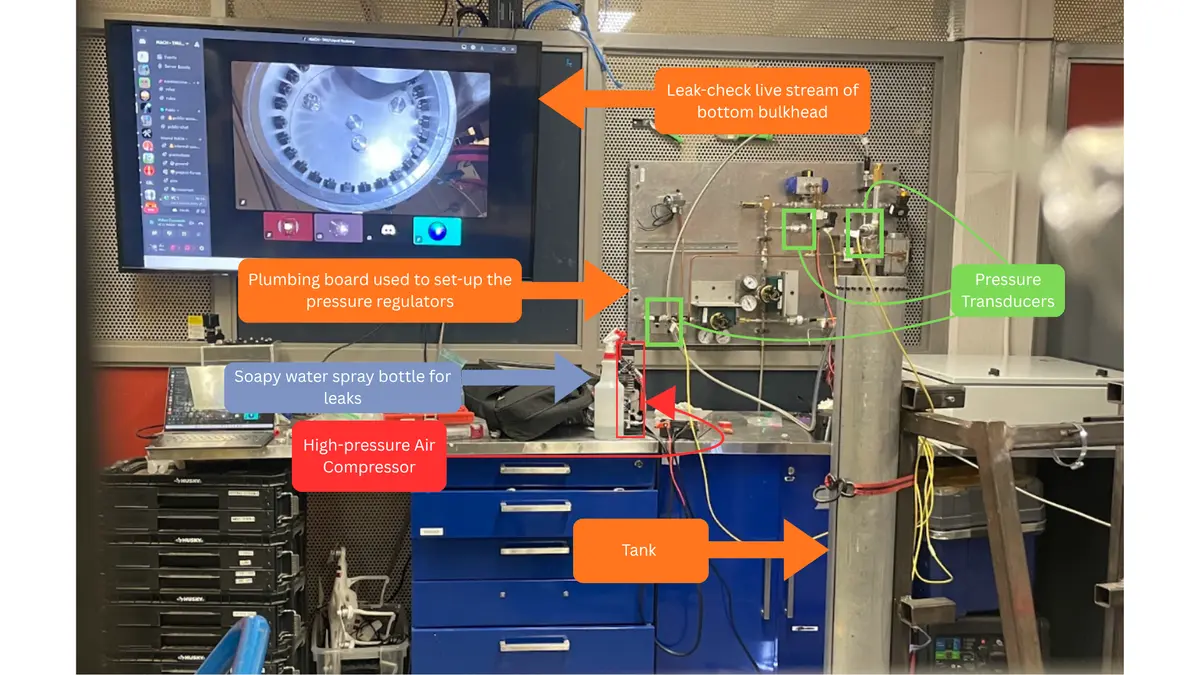
Seraphina tank proof test
Minor NPT-plug leaks were corrected at 100 psi. The live log later recorded aggressive leakage while climbing beyond 1,000 psi; the formal report states that the final 1,350 psi hold lasted 18 minutes with no pressure loss, leakage or visible deformation.
Setup, sequence and result -
Seraphina name adopted
The Seraphina name first appears in the archive on January 27. By January 31 MACH was using it for the 2026 tank-system overhaul: automated fuel and oxidizer loading, firing and pad safing. Opening the supply cylinders and setting the regulators remain manual.
- 2025 · Chimera, SABRE and SPRINT
-
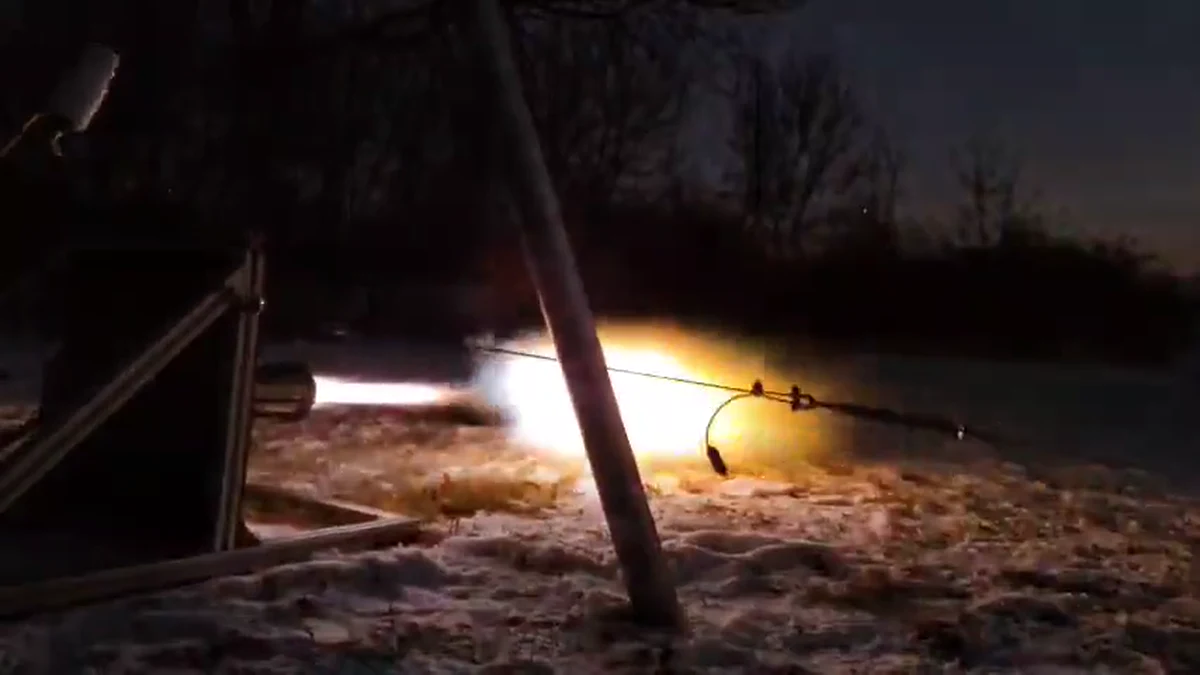
Cold-weather hot-fire campaign
At about −5 °C, the run peaked at 510.0 N and 107.2 psi chamber pressure; the oxidizer-tank channel read 264 and 256 psi at those peaks. Residual fuel ignited during purge while both main-valve command channels remained at 100%.
SPRINT test page -
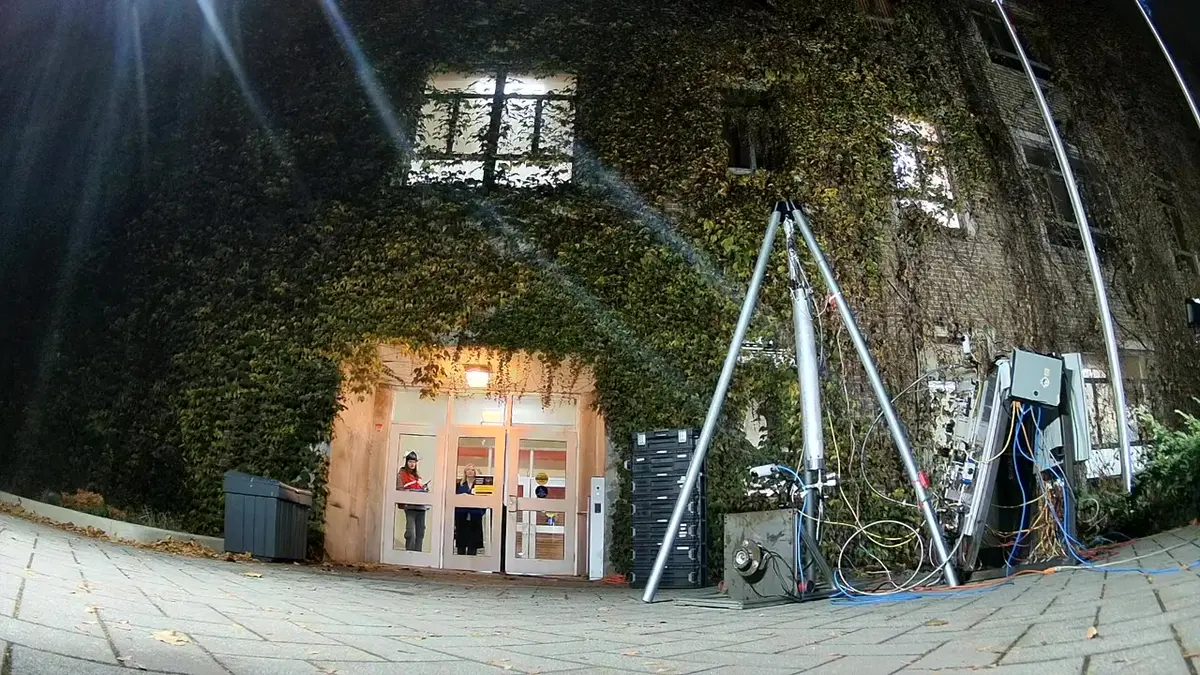
Mission-control integration
The quad campaign exposed a wrong V5 mapping, an incompletely installed P4 sensor and a CO₂ CGA leak that stopped after tightening. Data and a debrief were preserved.
SPRINT test page -
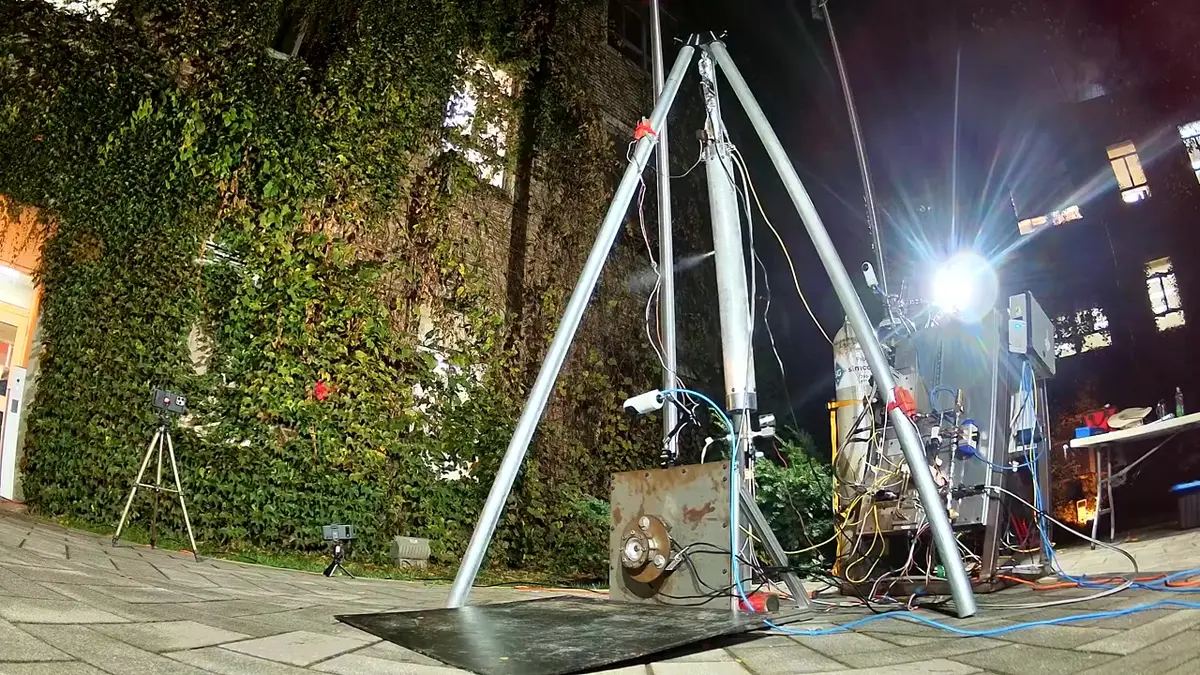
First quad cold flows
The first quad campaign after a controls rewrite completed two cold flows. Preserved files reached 579 and 523 psi oxidizer-tank pressure and averaged 56 and 34 rows per second, not the rates in their filenames.
SPRINT test page -
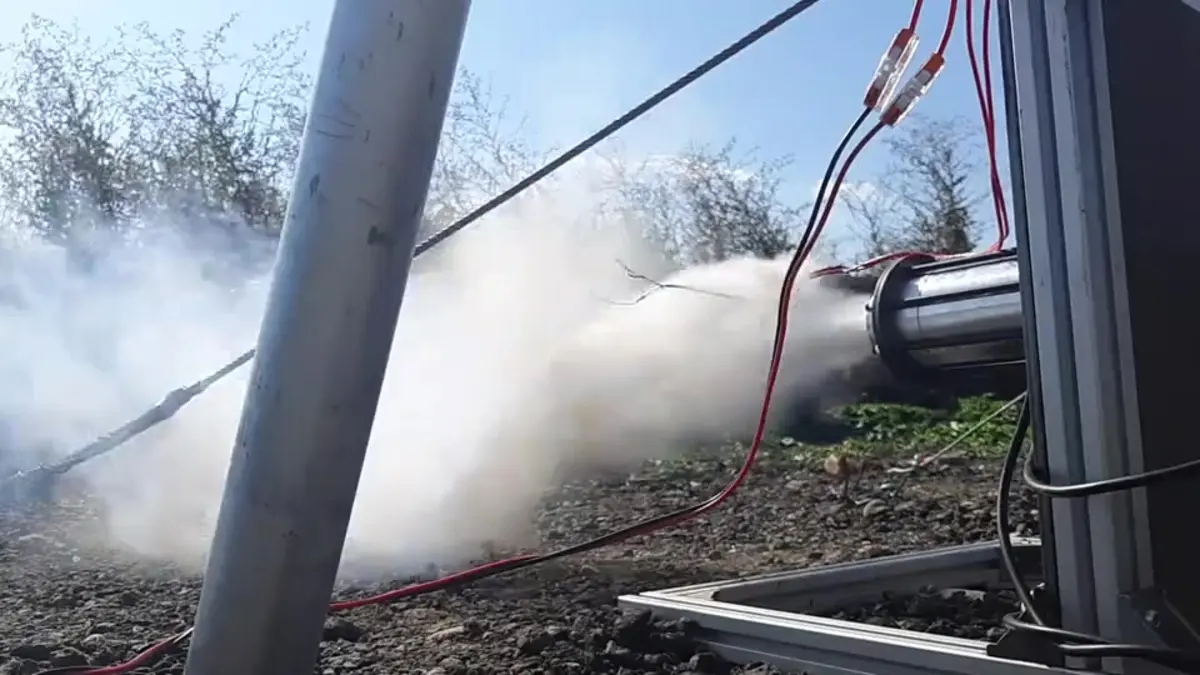
September ignition campaign
After an early igniter failure and cold flow, SPRINT fired later on September 13. Two more fires followed September 14; the final shortened run recorded 839.1 N peak thrust, 184.1 psi chamber pressure and approximately 2.4 kN·s total impulse.
SPRINT test page -
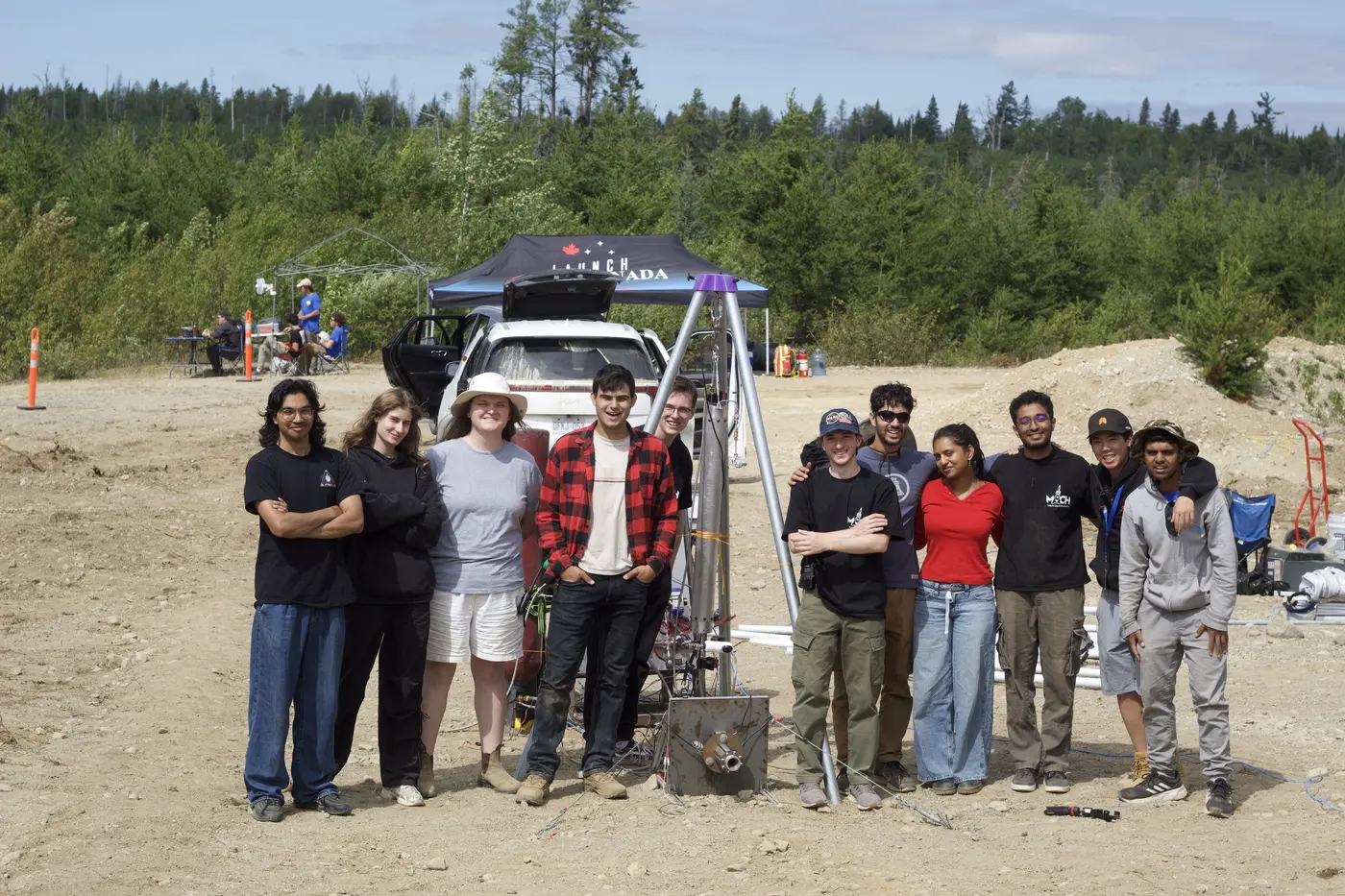
Launch Canada 2025
An ignition-threshold error and a fuel servo blocked by a turnbuckle stopped the first two attempts. The August 22 run reached engine cutoff with a partial fill; no usable telemetry was recovered.
SPRINT test page -
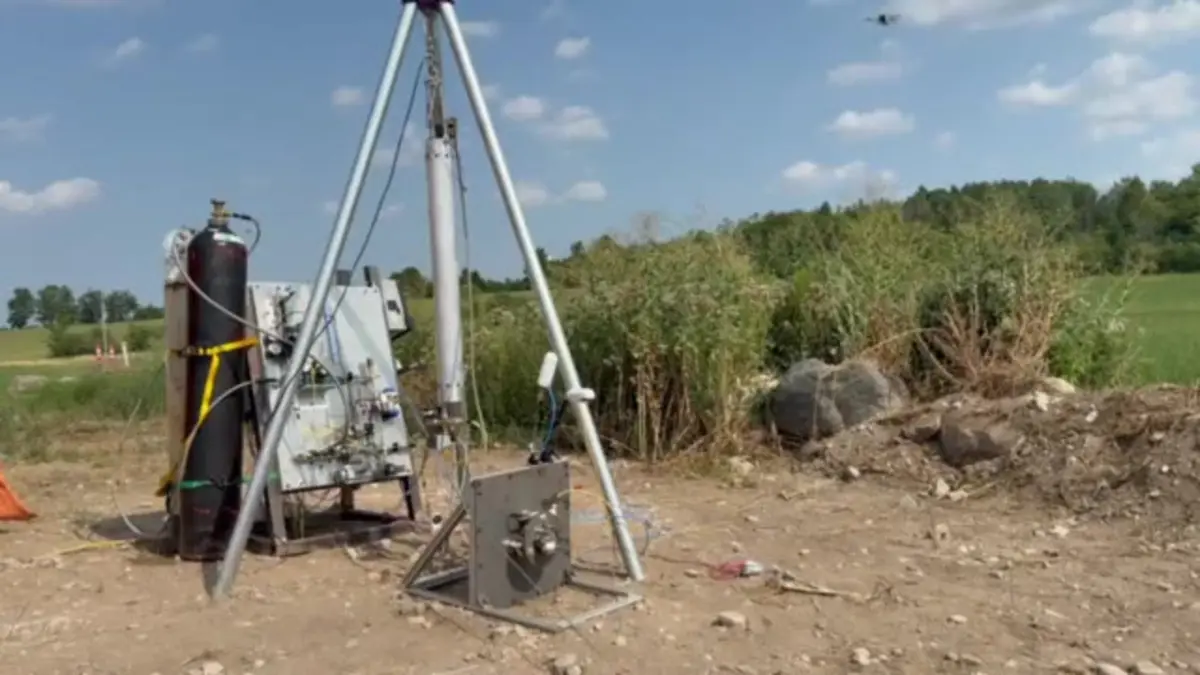
First integrated SPRINT weekend
The full-system leak check passed and CO₂ and distilled water were flowed. An igniter integration failure blocked the planned hot fire; no cold-flow telemetry was recorded.
SPRINT test page -
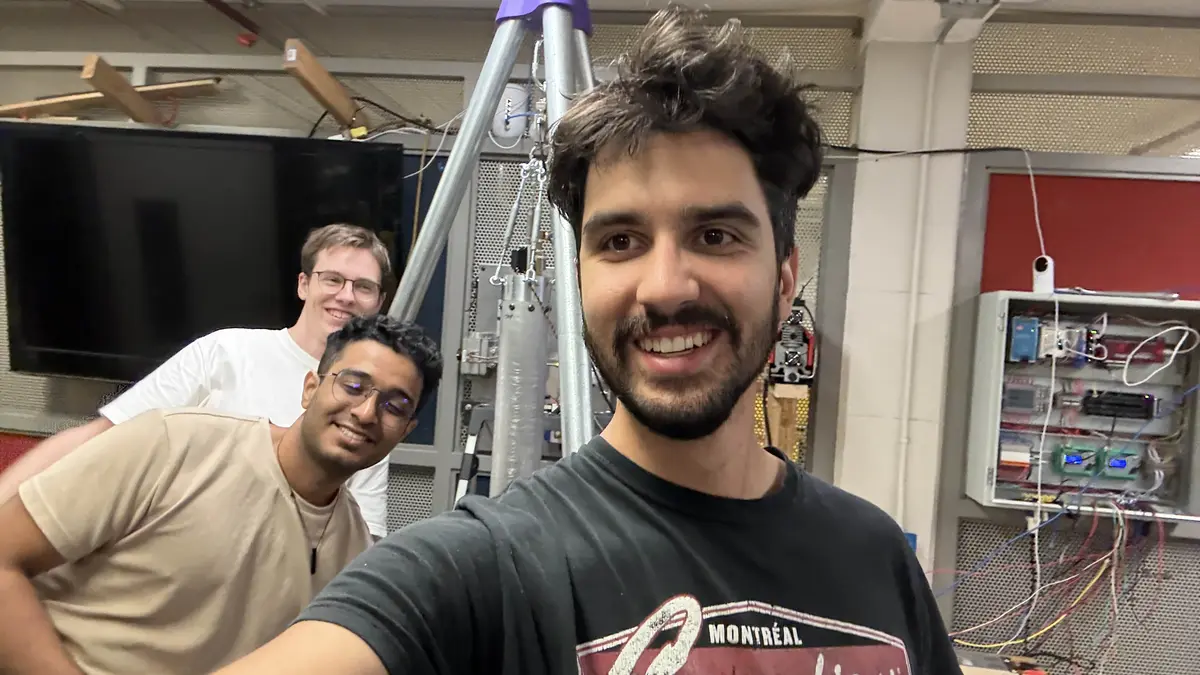
Suspended SPRINT hardware test
A result post states that the pressure test passed and shows the SPRINT tank suspended from its tripod. The tested pressure boundary, applied pressure and hold duration were not preserved.
Photo and evidence limits -
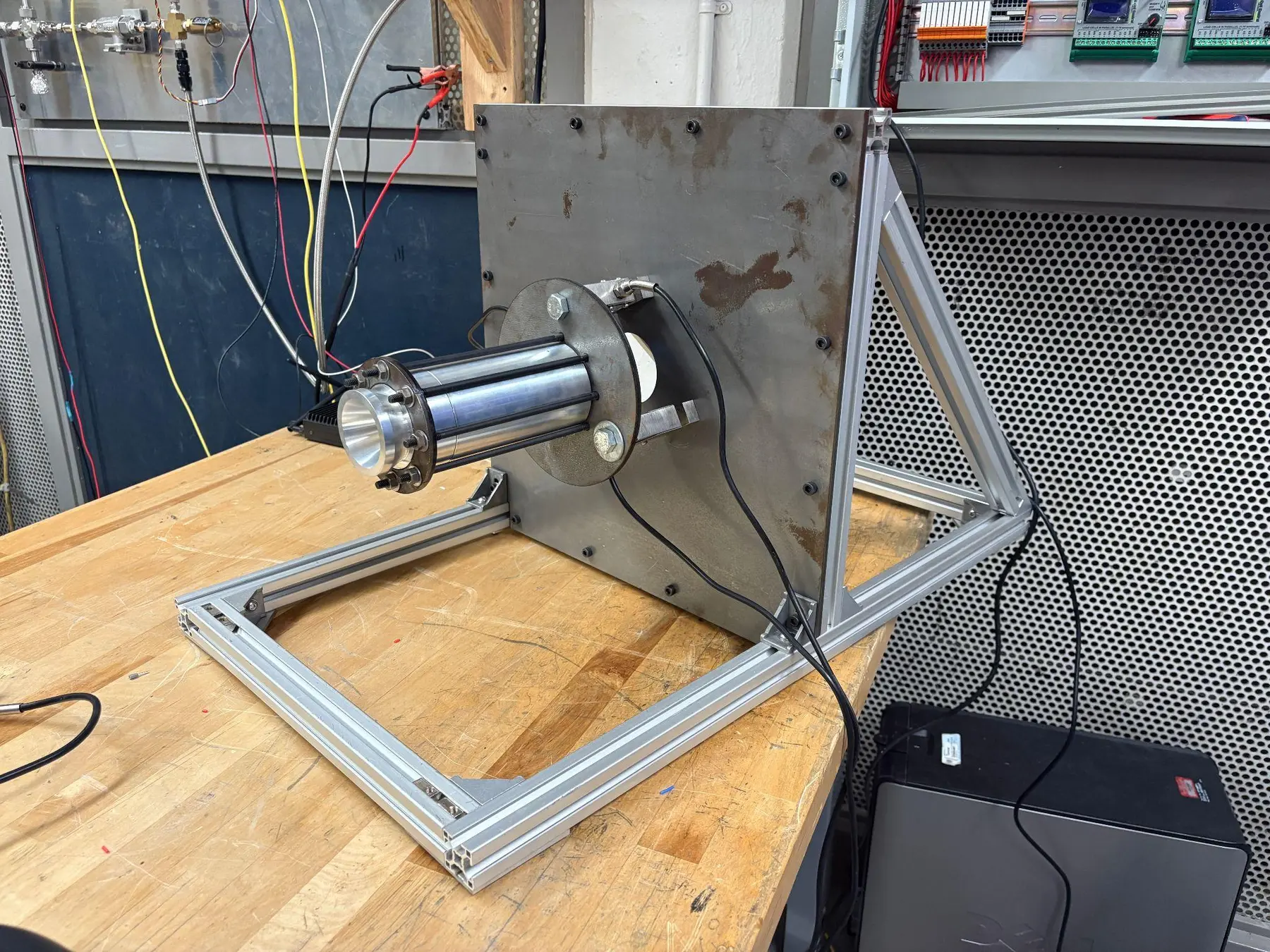
SPRINT stand, tripod and piston qualification
The stand passed 500 lbf proof and cyclic-load tests. The tank tripod carried three times expected load, and the piston held 800 psig.
Photos and qualification record -
SPRINT is named
The SPRINT name first appears on July 24 as “Small-scale Prototyping for Rapid Iteration & Testing.” SPRINT identified the rapid-development test system, not an engine rename.
-
Chimera ends; SABRE separates
Chimera was abandoned around June. On June 24 the regenerative-engine work was separated under the SABRE name. SABRE planning continued through at least October 22, but no firing was verified and its exact end date is not preserved.
-
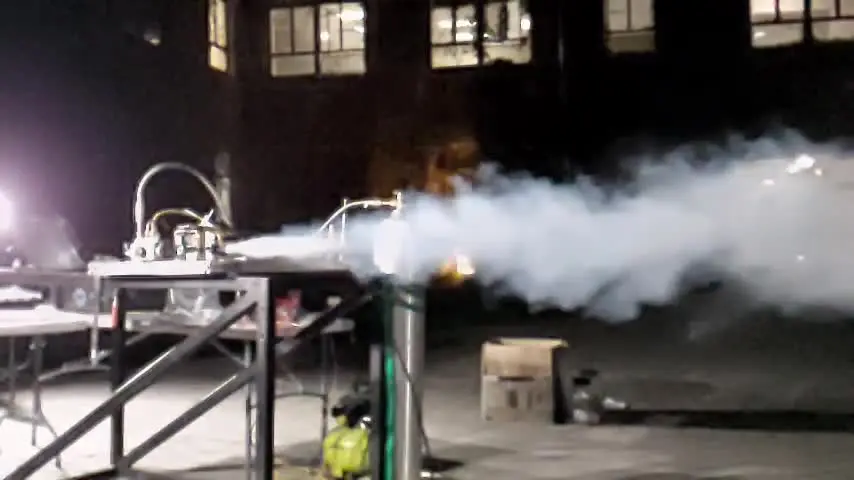
Subscale injector campaigns
Three March flows exposed a faulty data time base. Four May flows produced usable files; one unclamped article was ejected, leading to remote operation for full-scale tests.
Photos and result - 2024 · New GAR-E and Chimera
-
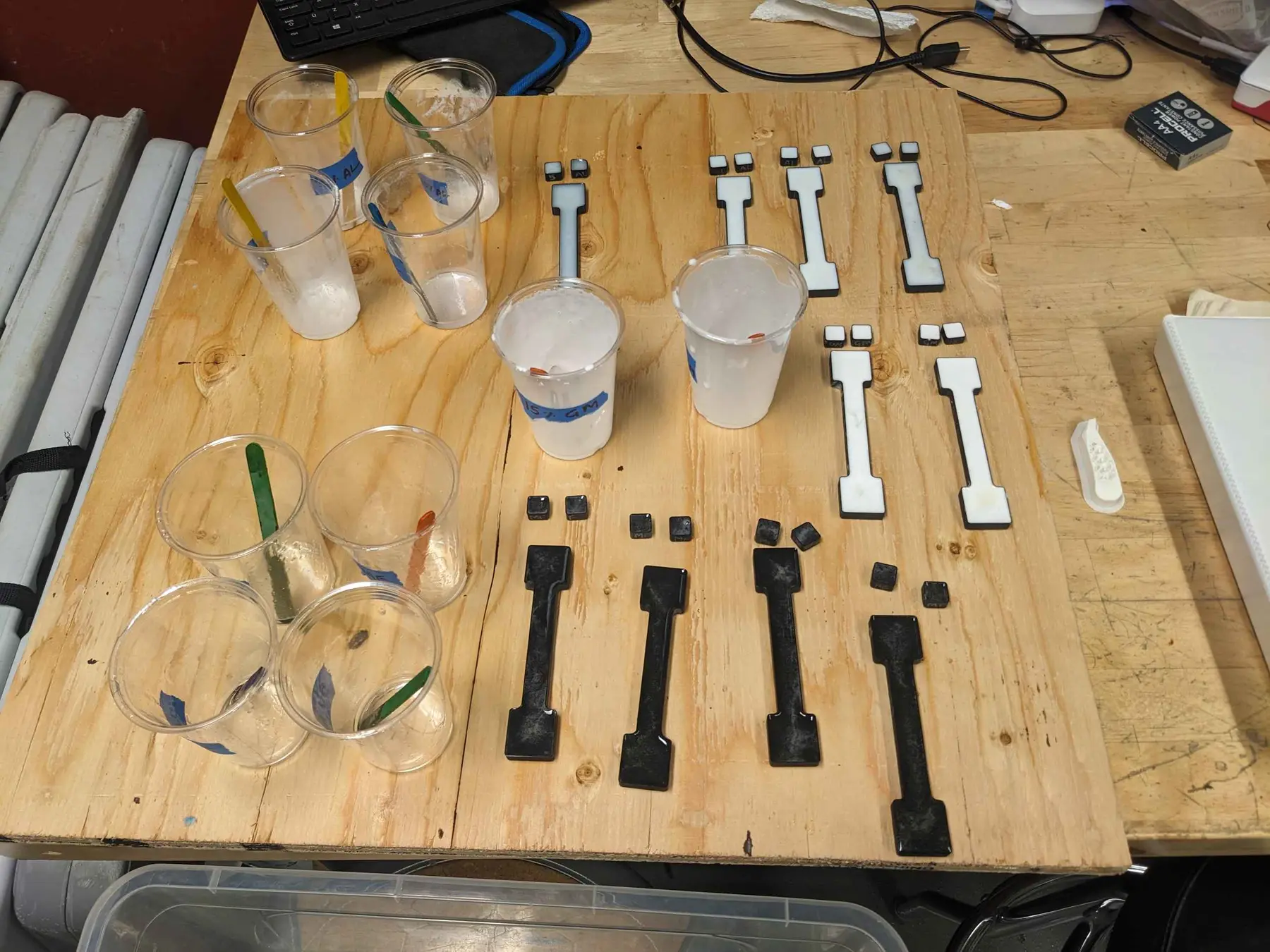
Chimera ablative tensile screening
Nineteen epoxy/additive specimens were tested. One specimen per formulation, visible defects and a low control result prevented a material down-selection.
Samples, plots and limitations -
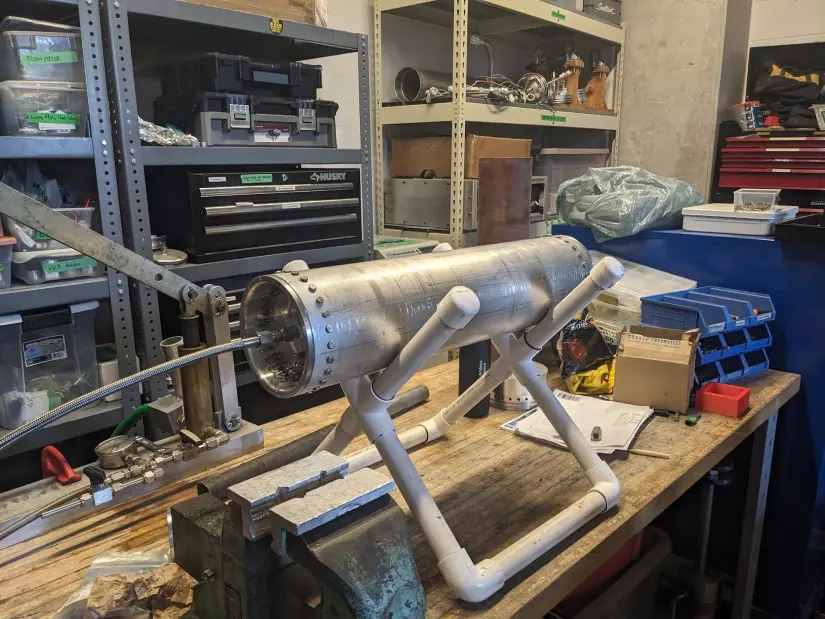
Fuel and oxidizer run-tank proof tests
Both tanks held 1,300 psi for 15 minutes. An initial leak at the oxidizer tank's capped relief port stopped after the fitting was tightened.
Photos and measured results -
Chimera subprojects announced
The chamber, injector, torch-igniter and thrust-vector-control subprojects were introduced for the 1,500+ lbf Chimera engine. This is the first verified dated Chimera program announcement in the reviewed archive.
-
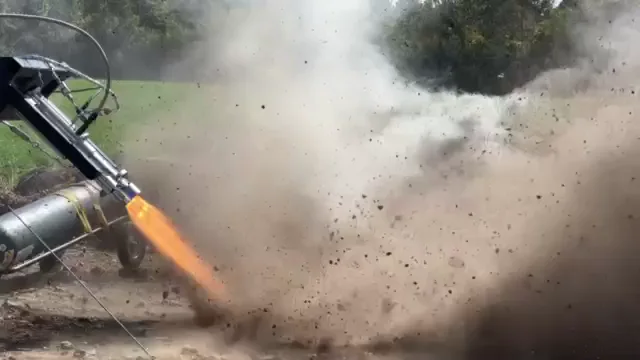
Final New GAR-E campaign
An integrated RNX-puck ignition test worked September 28. The September 29 firing reached about 1.07 kN before the graphite nozzle separated as full ignition developed, roughly 0.2 seconds after valve opening. The archive does not establish one root cause.
GAR-E test page -
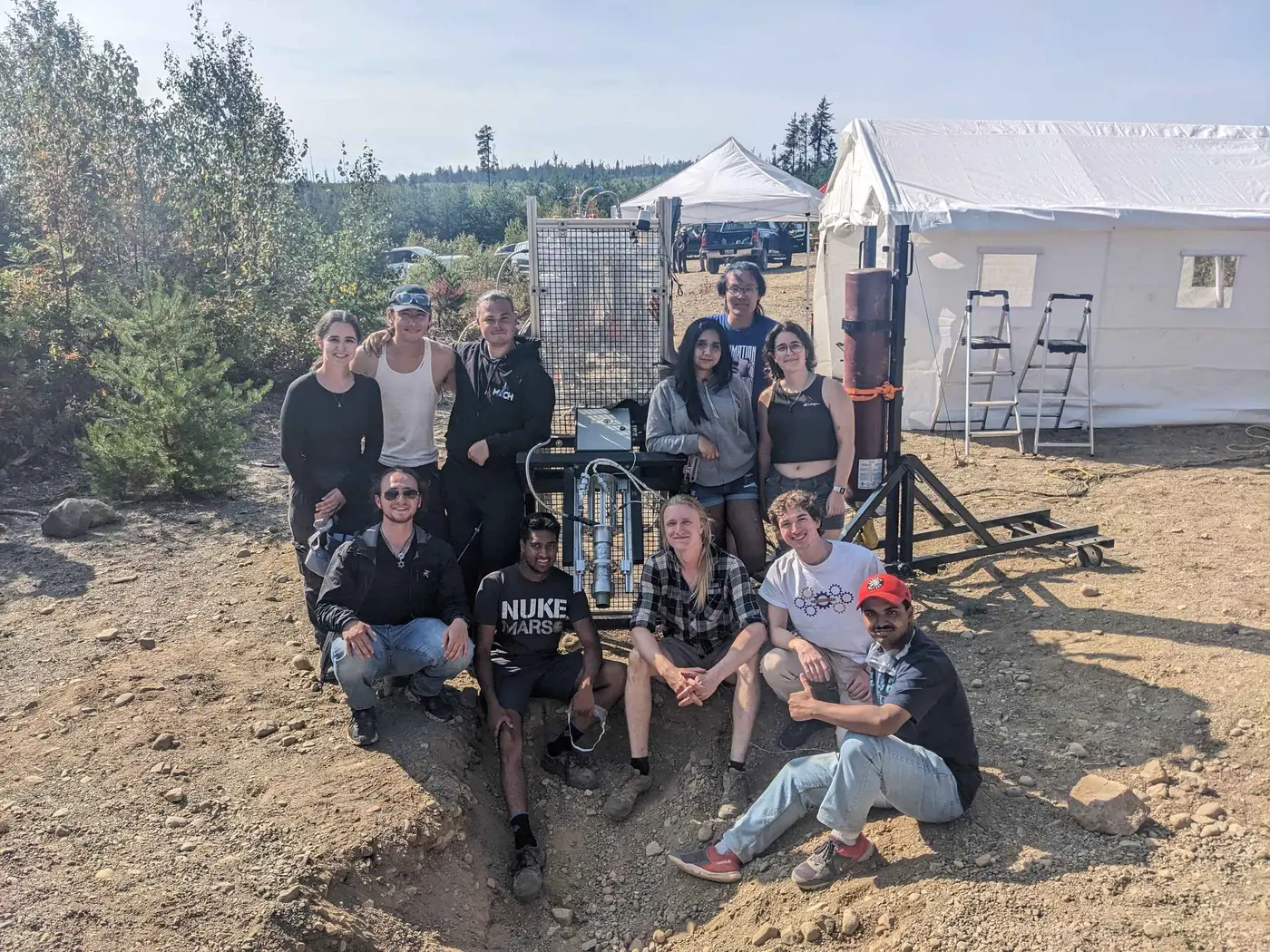
Launch Canada 2024
Two attempts failed on August 20; a brief ignition did not sustain on August 21. A cast igniter and hard-coded sequence produced the first sustained in-chamber GAR-E firing on August 22.
GAR-E test page -
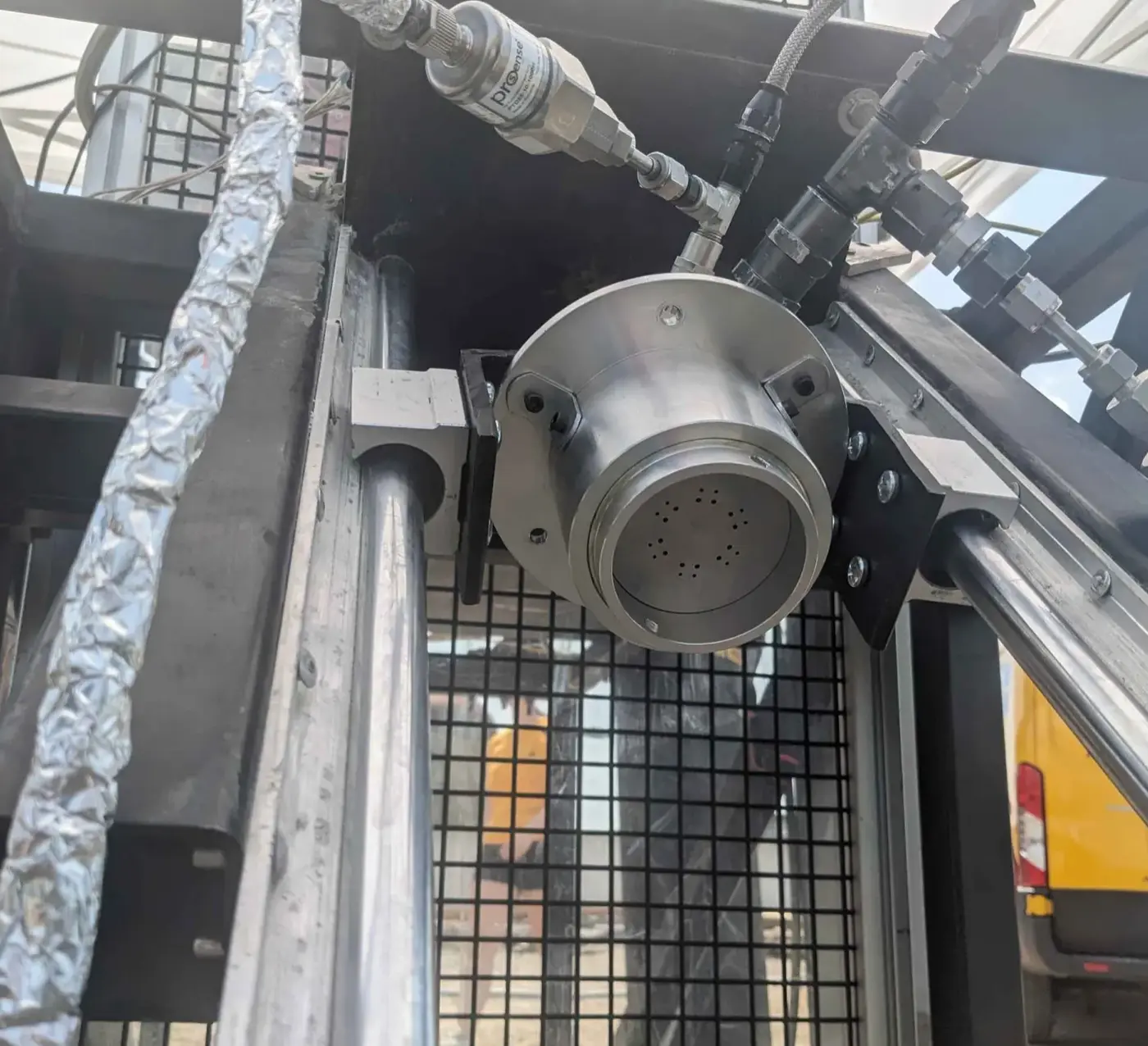
New GAR-E injector characterization
Two inert flows measured 0.189 kg/s fuel-side flow, 106–108 psi fuel-injector drop and 0.53 kg/s oxidizer-side flow. Excess loss was isolated to the fuel-volute transition.
GAR-E test page -
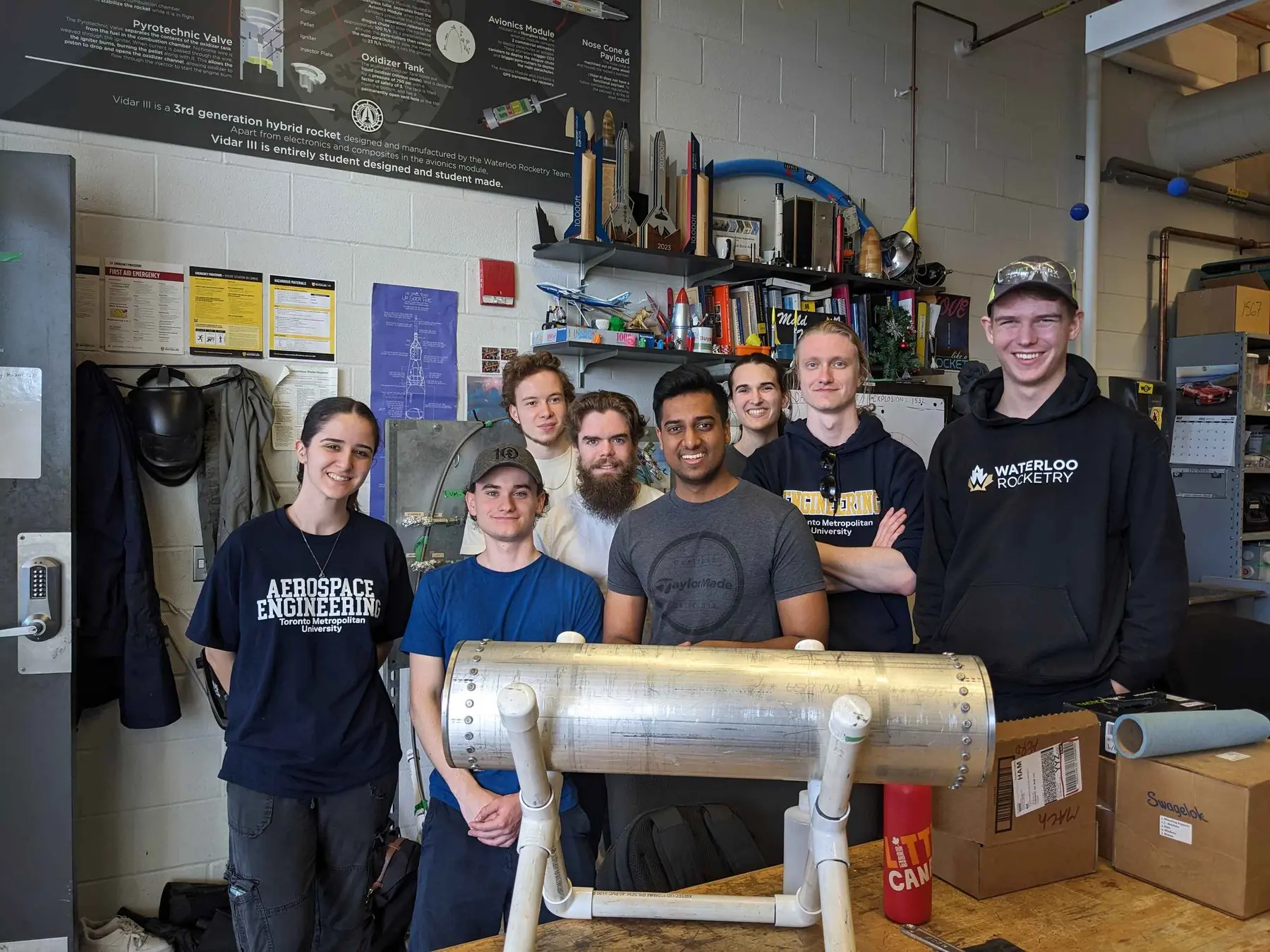
Day-Glo tank and New GAR-E case proof tests
The Day-Glo ethanol tank and New GAR-E engine case both passed. Later reporting describes the tank proof as 1.5 times MEOP; the exact setpoint was not preserved.
Photos and result -
New GAR-E defined
The approximately 300 lbf replacement engine retained Spender but used a new chamber, nozzle and 12-orifice injector. It was distinct from Fat GAR-E.
- 2023 · Spender and GAR-E testing
-
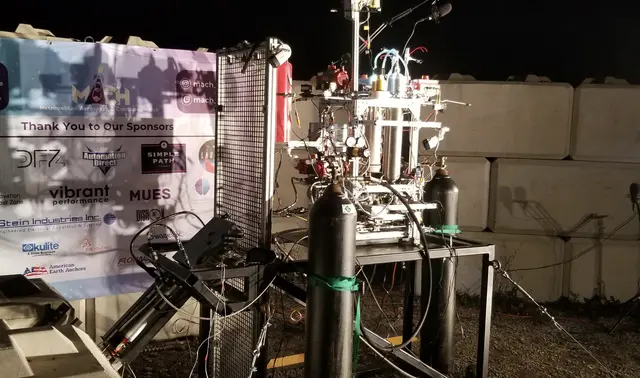
First integrated liquid-propellant ignition
The gerb lit propellant near the throat, fell from its mount and left combustion anchored between the concrete barriers. The 80 psi rise came from cold nitrous flow, not sustained chamber combustion; the force reading was invalid.
GAR-E test page -
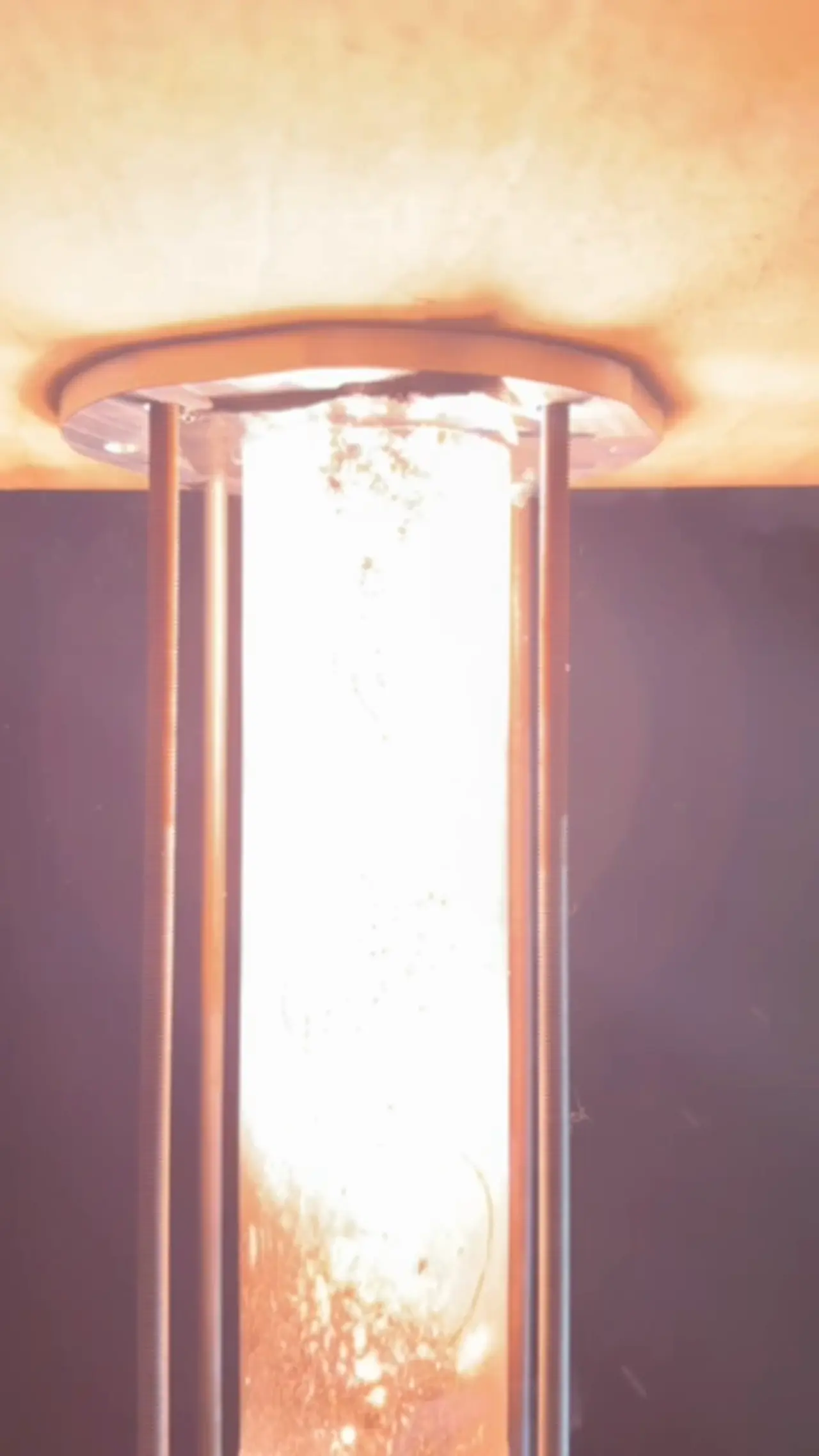
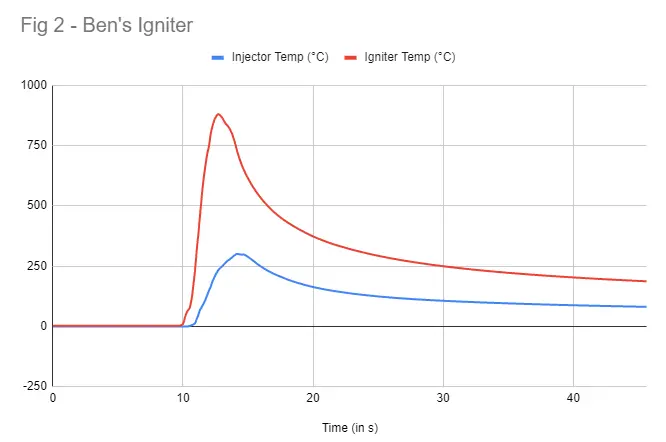
GAR-E igniter acceptance tests
Two instrumented burns reached igniter peaks of 1,032 °C and 860 °C. The second downstream thermocouple exceeded ethanol autoignition temperature for 10.3 seconds.
Video, raw data and temperature plot -
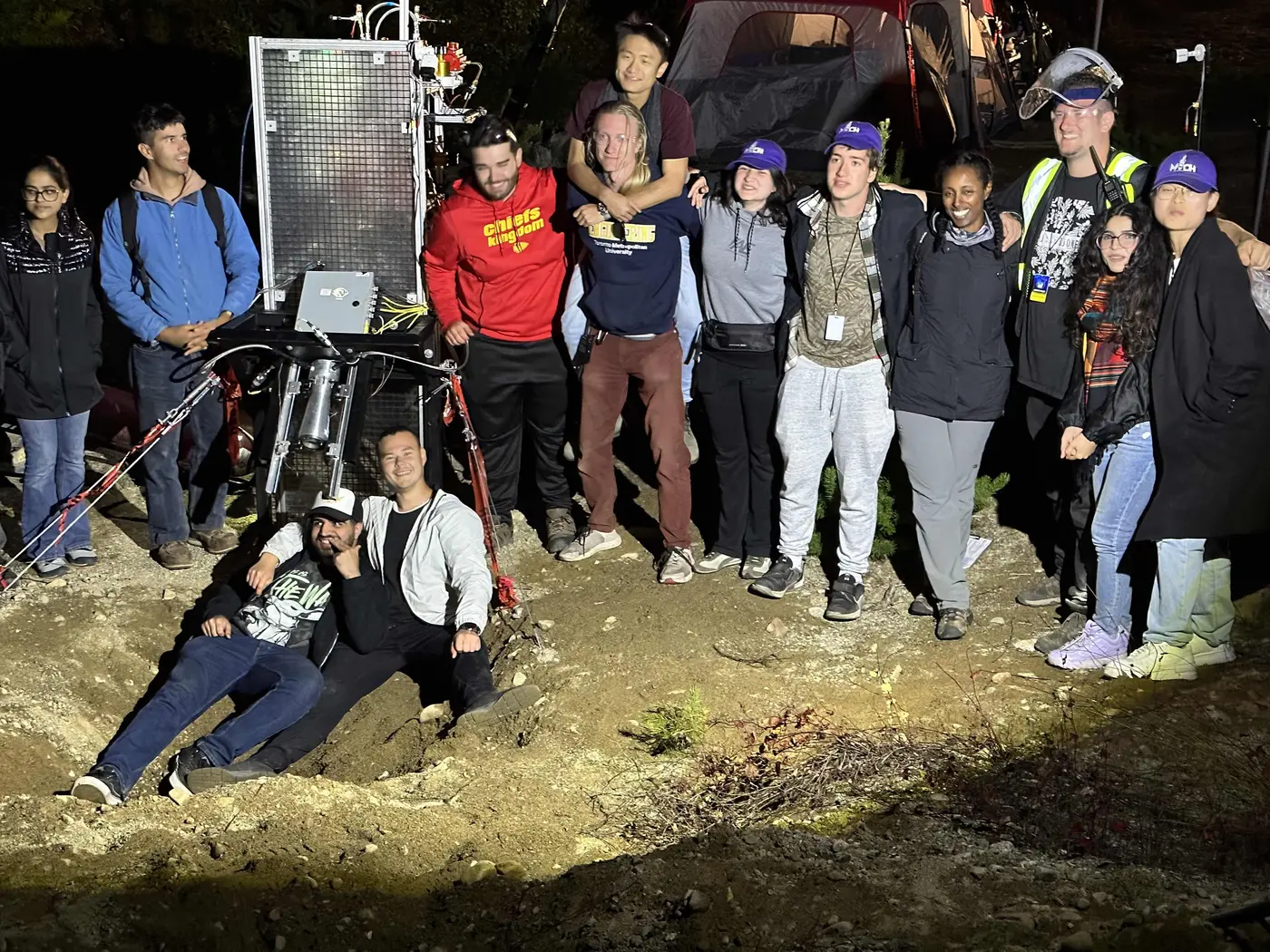
Launch Canada 2023
Propellants flowed, but the igniter exploded 0.883 seconds after the E-match and before the main valves opened. The abort worked and the system was undamaged.
GAR-E test page -
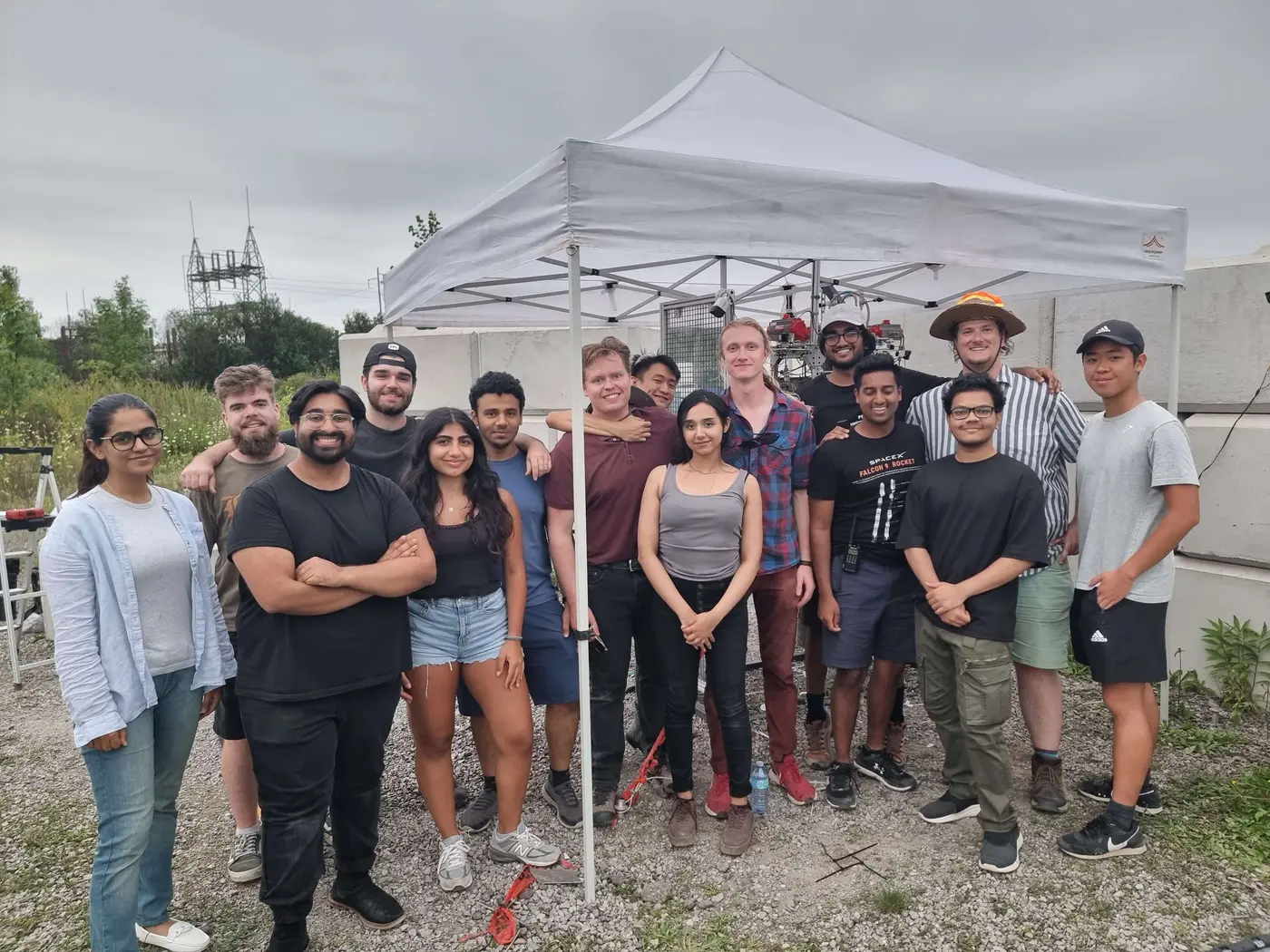
Pre-Launch Canada campaign
One water and two CO₂ injector flows were completed. The engine computer froze and one CO₂ record ended before the main oxidizer valve opened; the fuel-injector drop was about 150 psi.
GAR-E test page -
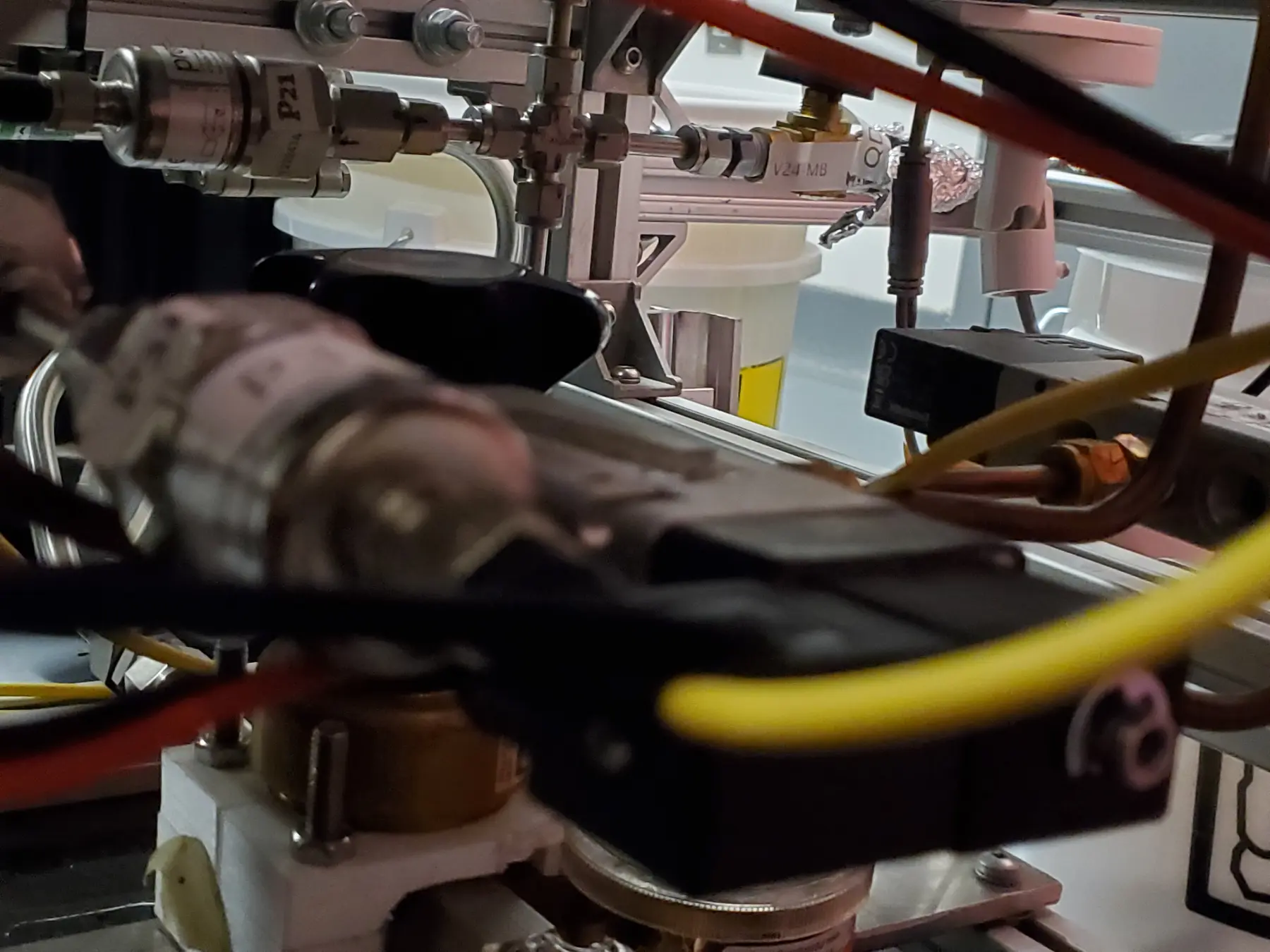
Igniter housing failure
Excess internal volume let one igniter pressurize and separate its head, leading to changes in grain placement, venting and geometry.
Photos and failure summary -
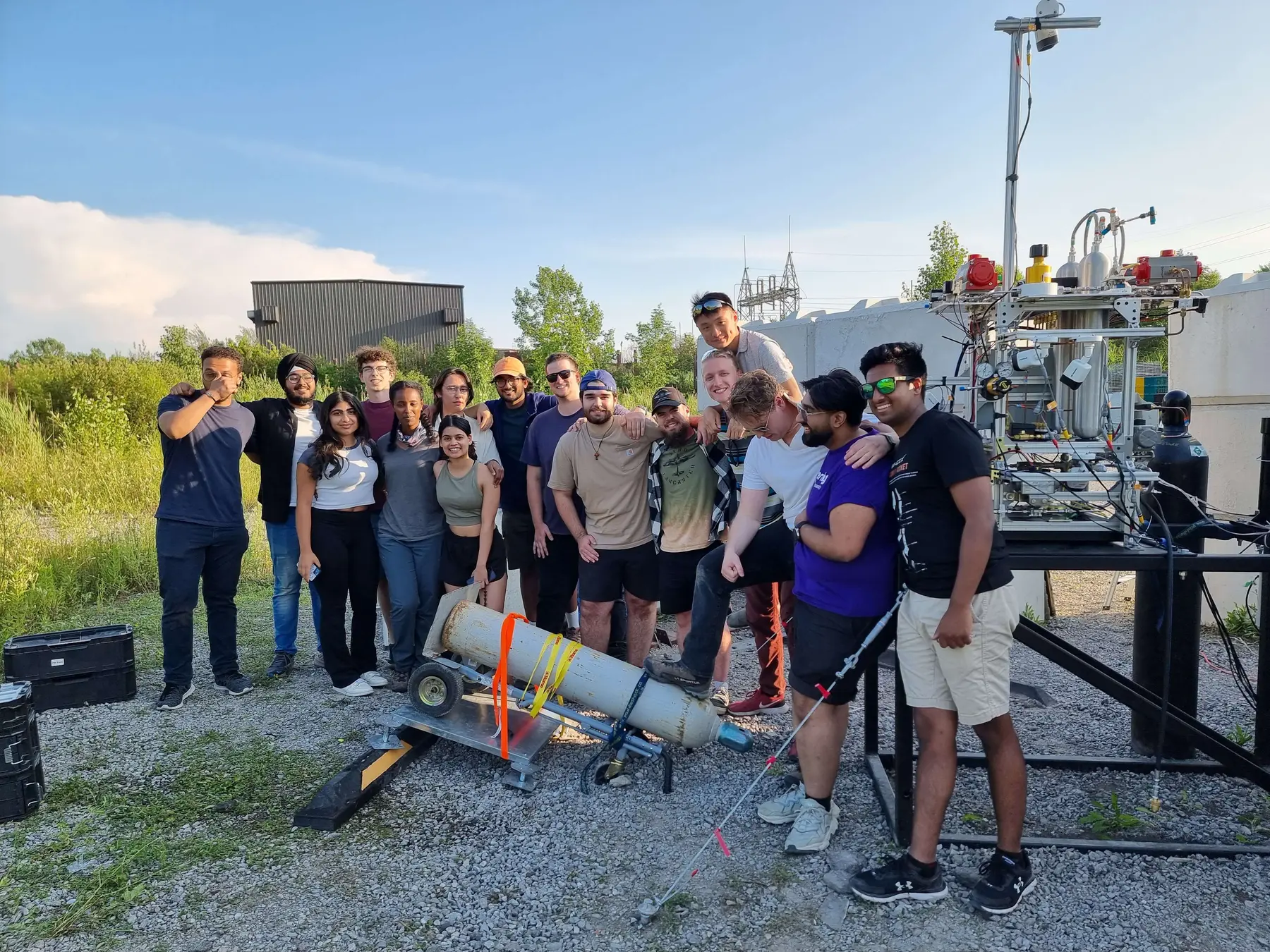
Spender Cold-Flow Campaign 3
Water and CO₂ flowed separately and together. The final report calculated 0.162 kg/s water and 0.354 kg/s CO₂ flow, with discharge coefficients of 0.83 and 0.76.
Photos and measurements -
Cold-flow test day scrubbed
The planned test did not progress to a confirmed flow. No media was assigned because no test occurred.
-
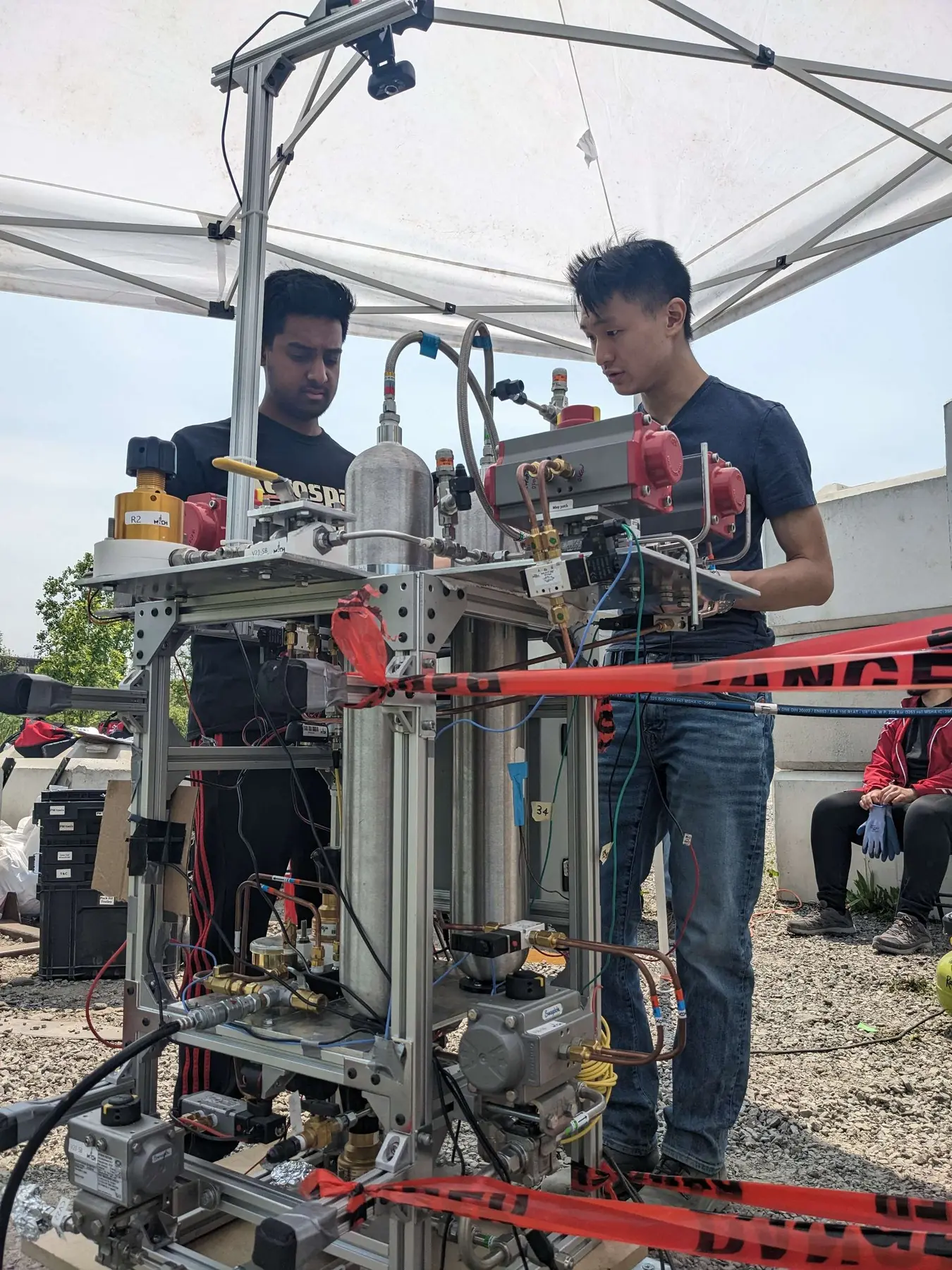
Spender Cold-Flow Attempt 2
The rebuilt system held pressure after pad repairs, but controls work consumed the test window. Later review measured an oxidizer-side leak near 5 cm³/s; no full flow occurred.
Photos and result -
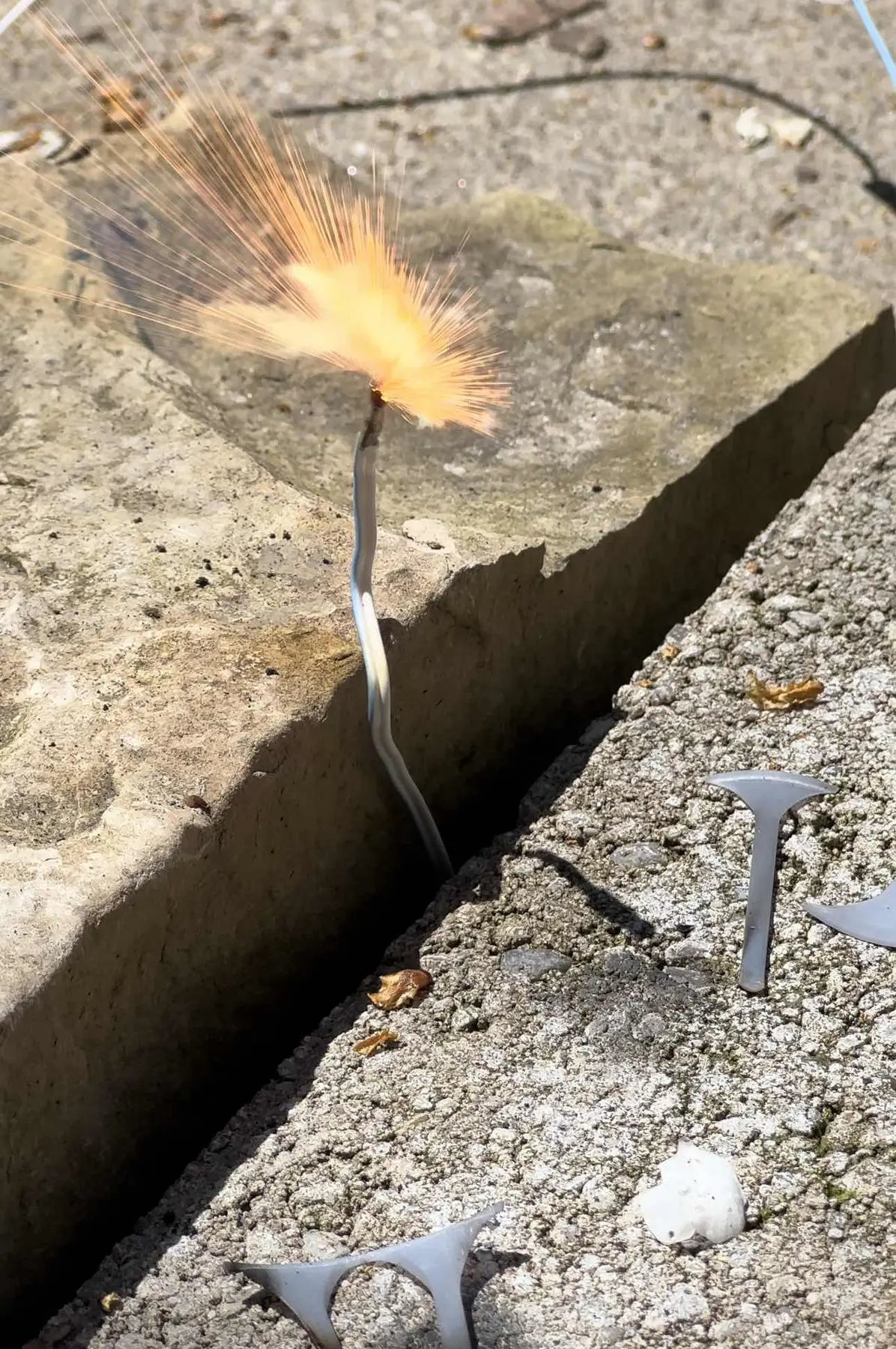
Igniter, pneumatic and valve tests
Five igniter trials exposed E-match, vent-area and thermocouple-retention failures. A revised igniter worked; pneumatics and every tested valve passed pressure checks.
Photos and results -
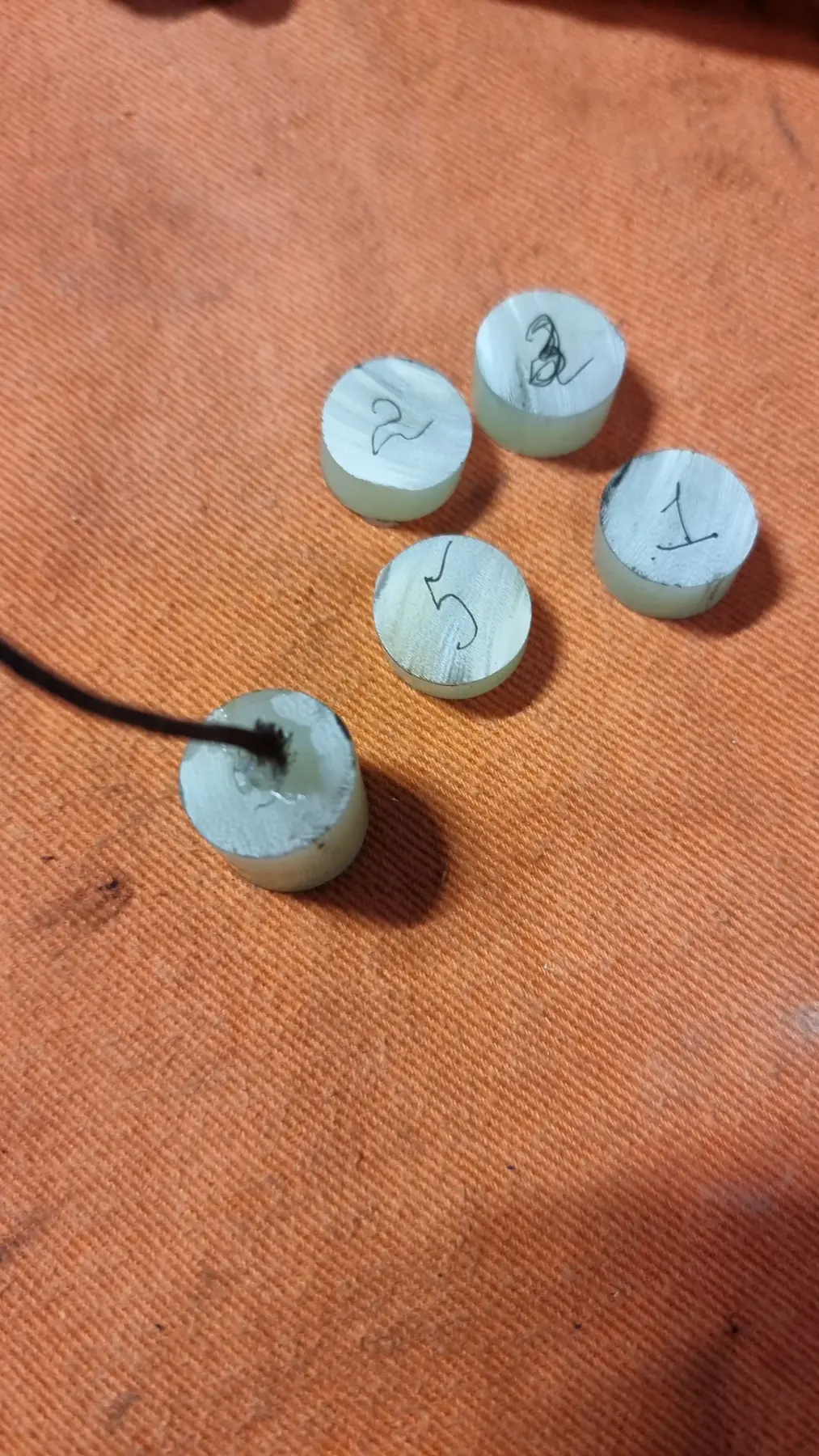
Garolite ablative tests
G10/FR-4 samples were burned from 6 to 75 seconds plus a longer trial. Bad thermocouple installation and fumes changed the procedure.
Photos and result -
Igniter and thermocouple campaign
Multiple designs and sensor positions were tested. Corrupted records and placement problems make the reported temperatures non-definitive.
Plots and record note -
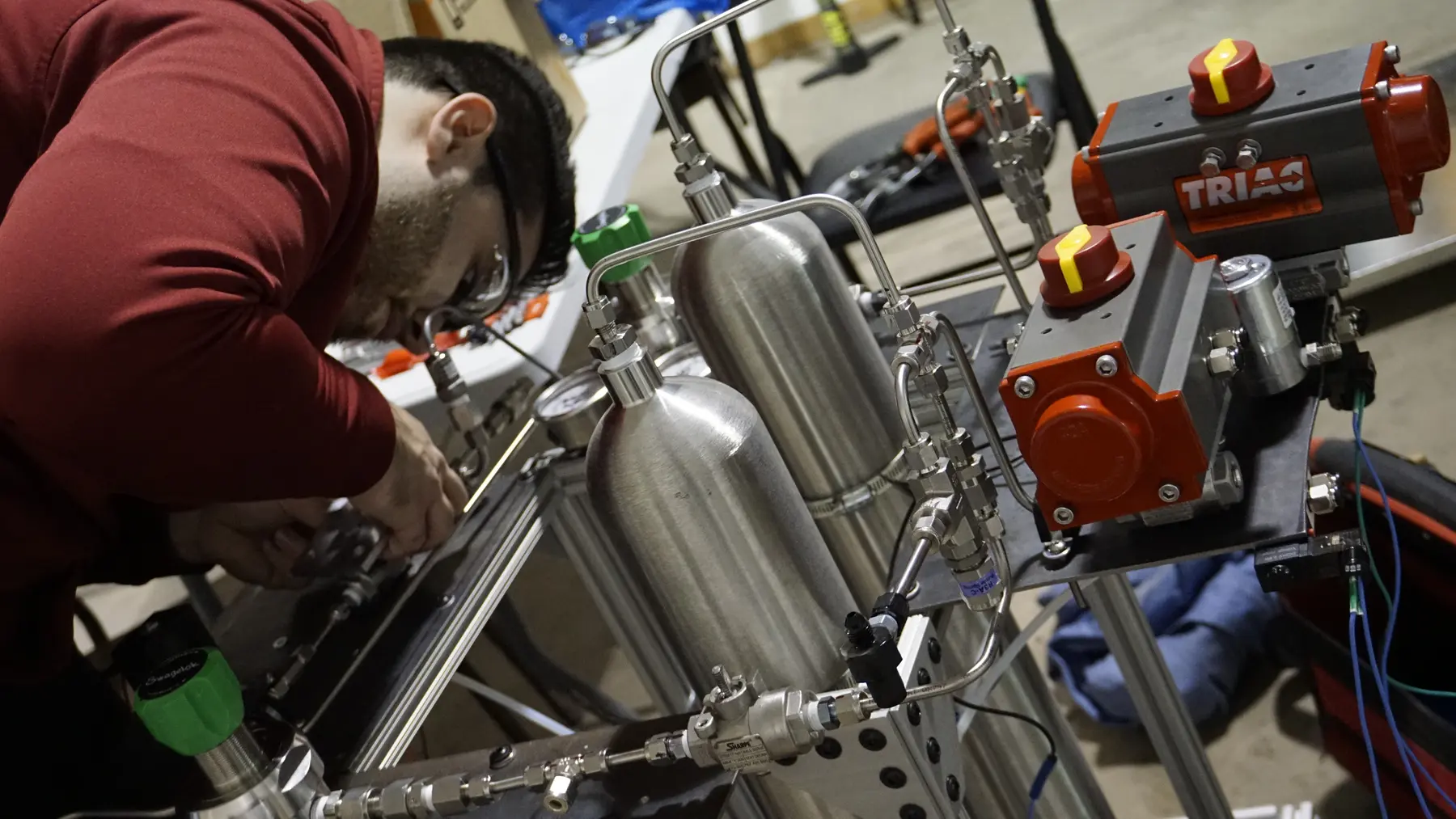
Spender Cold-Flow Attempt 1
The main pressurant-valve stem seal yielded after its packing hardware was assembled incorrectly. Downstream isolation prevented further damage; no complete flow occurred.
Photos and failure summary - 2022 · MACH, GAR-E and Spender
-
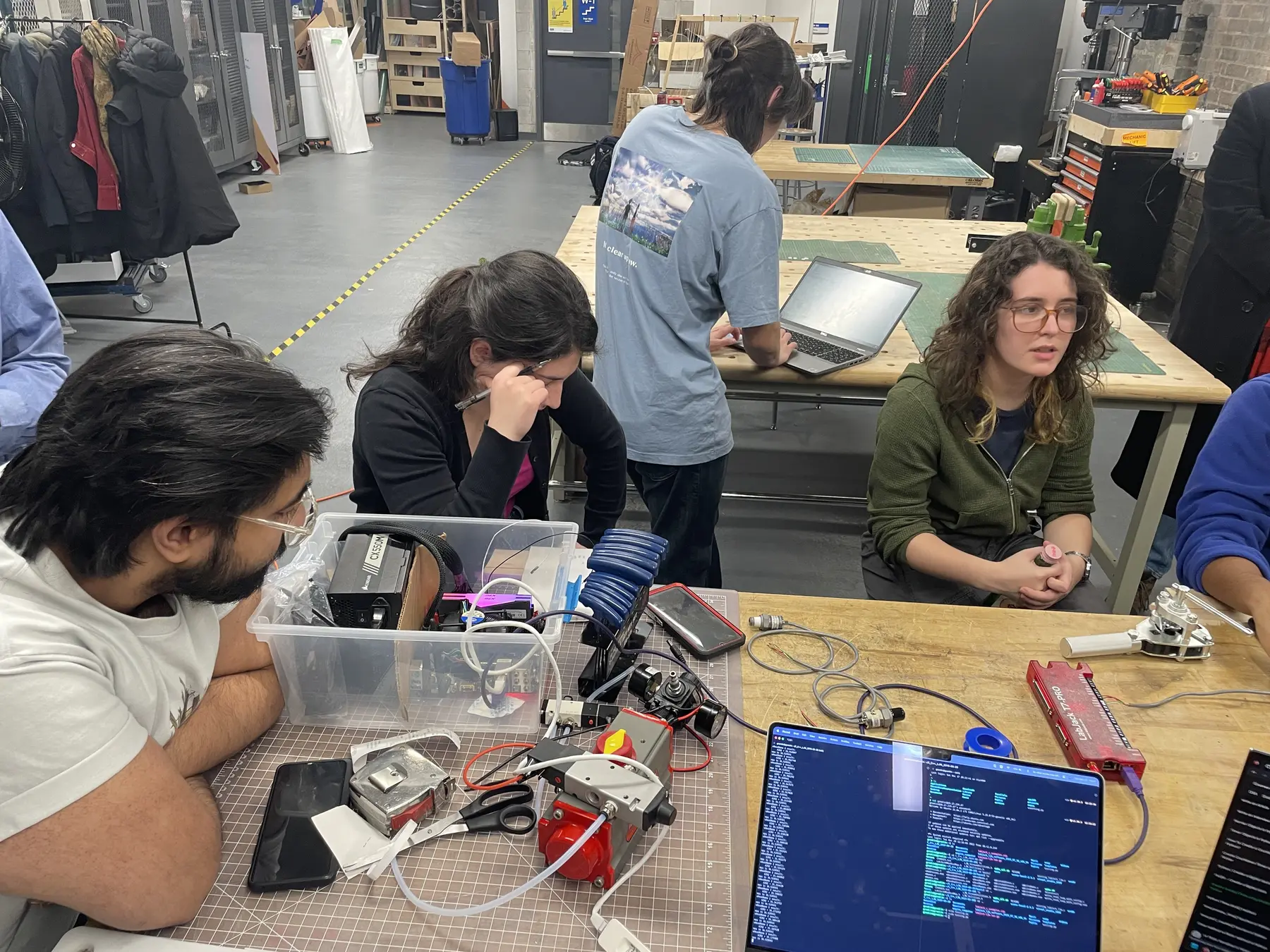
Pressure-test equipment checkout
The water pump, regulator and pressure-transducer setup held approximately 500 psi with about 600 psi at its inlet.
Photos and result -
Winter test-tent trial
A 40 min tent trial raised the measured temperature from 6 °C to 11 °C while ambient temperature was 3 °C and wind was about 10 km/h. The safety team used the result to define winter test-day go/no-go limits.
-
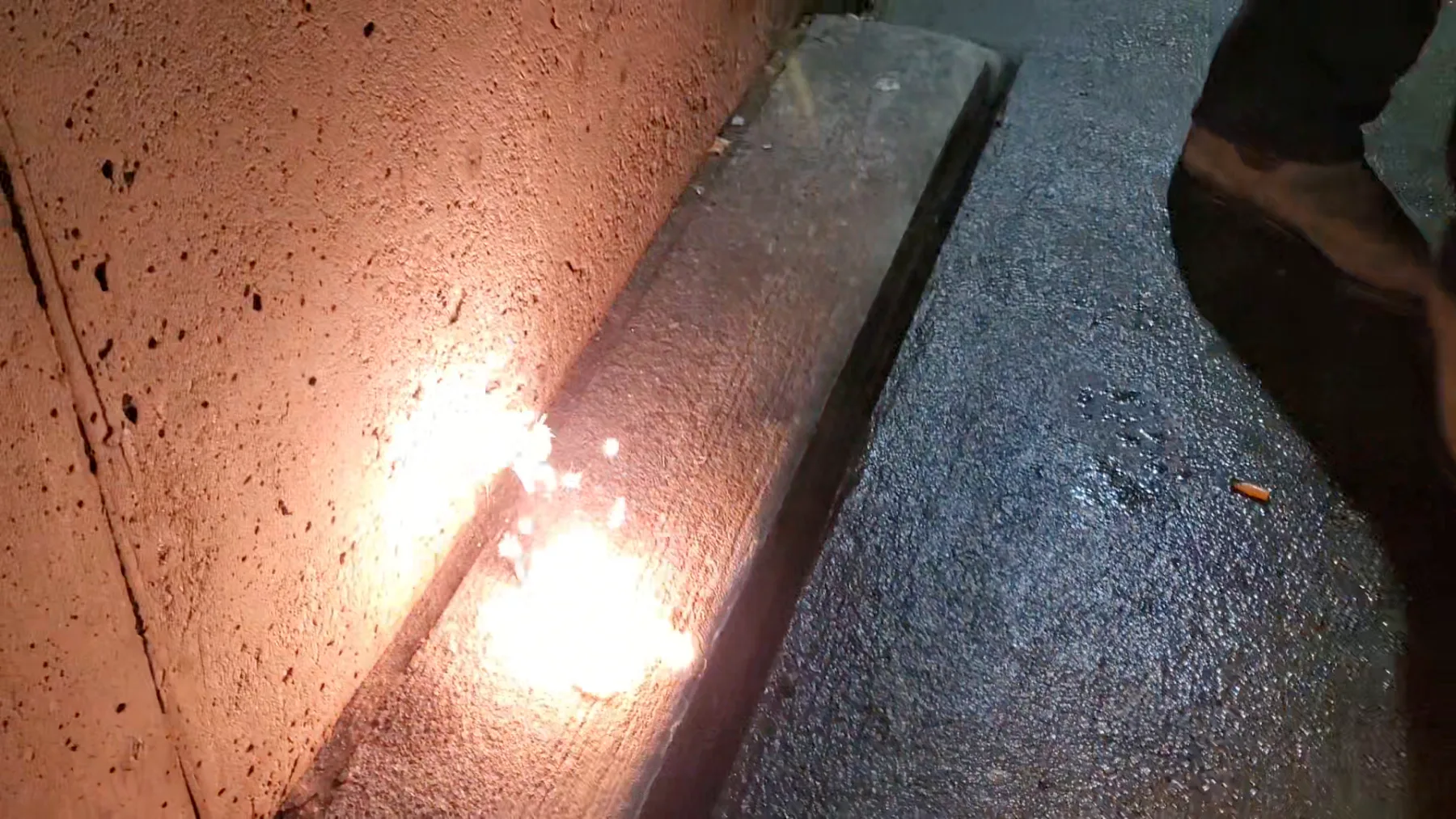
SLA igniter-housing flame test
Clear SLA resin was exposed to direct flame and an APCP G-motor grain segment. The result set a 1.5 mm minimum wall for the next GAR-E igniter-housing designs; no complete igniter was fired.
Test media and result -
Day-Glo and Fat GAR-E
Fat GAR-E was proposed as an approximately 4.45–6.67+ kN engine for the Day-Glo flight vehicle. It was a separate development branch, not a rename of the GAR-E engine later fired on Spender. No Fat GAR-E firing or Day-Glo flight was verified.
-
Borealis is paused; Spender is named
Leadership placed Borealis on hold November 19 to prioritize GAR-E and the feed system. On November 25 the propellant stand and plumbing were named Spender; engine-side computing was Gremlin, data acquisition was LabJack and PLC/power hardware was Simple Jack.
-
Borealis chamber proof test scrubbed
The October 22 plan called for separate chamber and cooling-jacket hydrostatics, leak checks, dimensional measurements, telemetry and valve actuation. Missing cooling-jacket and plumbing parts delayed the test; on November 4 it was postponed until further notice. No completed Borealis chamber proof test was found.
-
GAR-E is introduced
GAR-E retained Borealis's internal combustion geometry but replaced its machined copper chamber with lower-cost, machinable Garolite. The team expected the ablative chamber to cost a few hundred dollars plus the injector.
-
RPG becomes MACH
The rename process was announced May 24 and a member vote followed July 18. MACH was in active use by August 24, the new logo appeared September 13 and the public RPG-to-MACH transition was announced September 30.
-
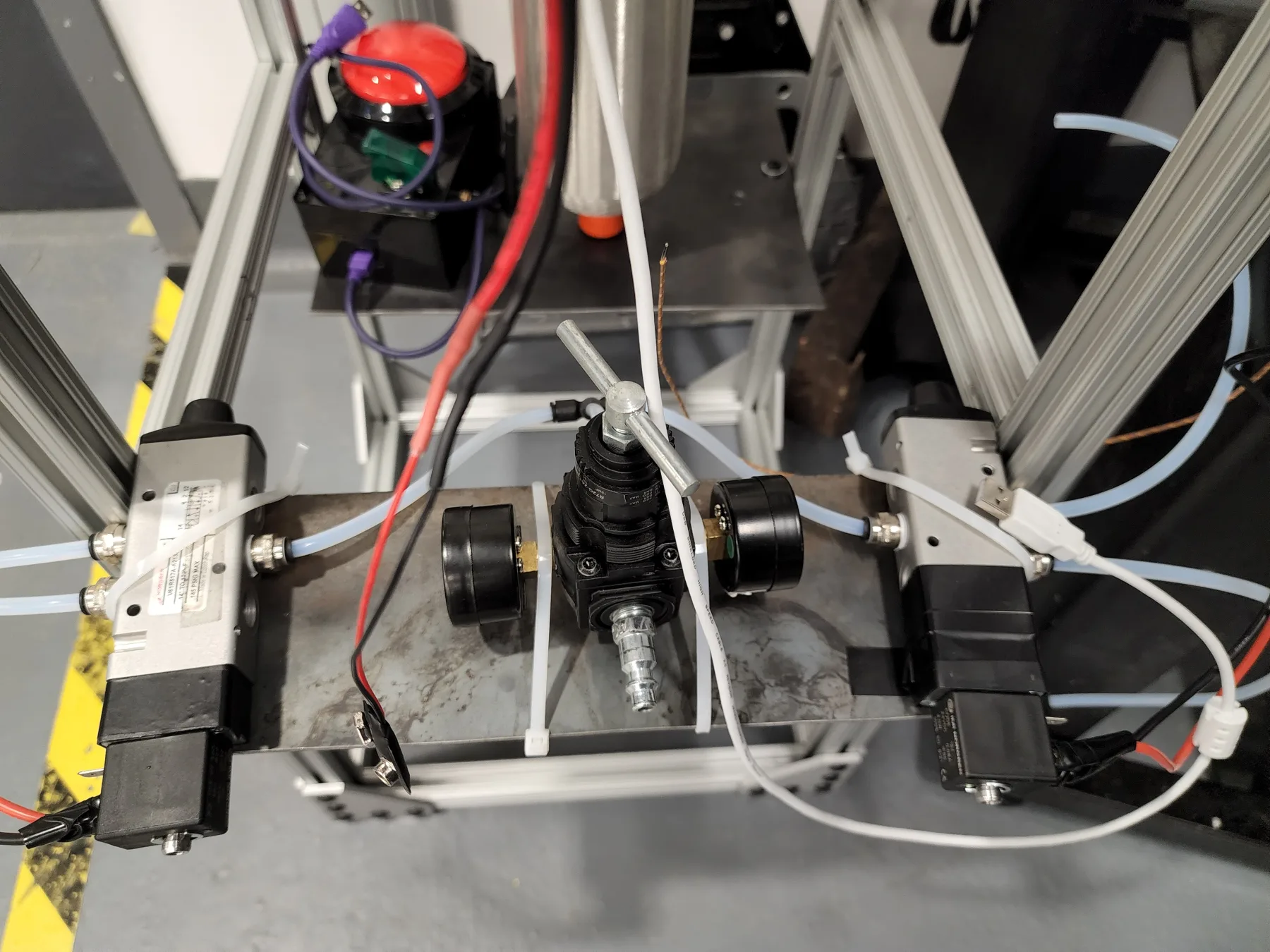
Borealis valve-control integration
The main fuel and oxidizer valves were mounted and pneumatically actuated. Five solenoid valves could be controlled, but an unreliable radio link forced the demonstration to use a manual switch. No test fluid was loaded.
Photos and result -
Borealis cold-flow campaign
The revised Borealis design targeted 1.76 kN thrust and a 700 psi chamber, with water cooling and water/liquid-CO₂ test fluids. The May progress report still described the propellant stand plumbing as significantly incomplete. RPG attended Launch Canada from August 1–6, but no integrated Borealis flow was recorded.
-
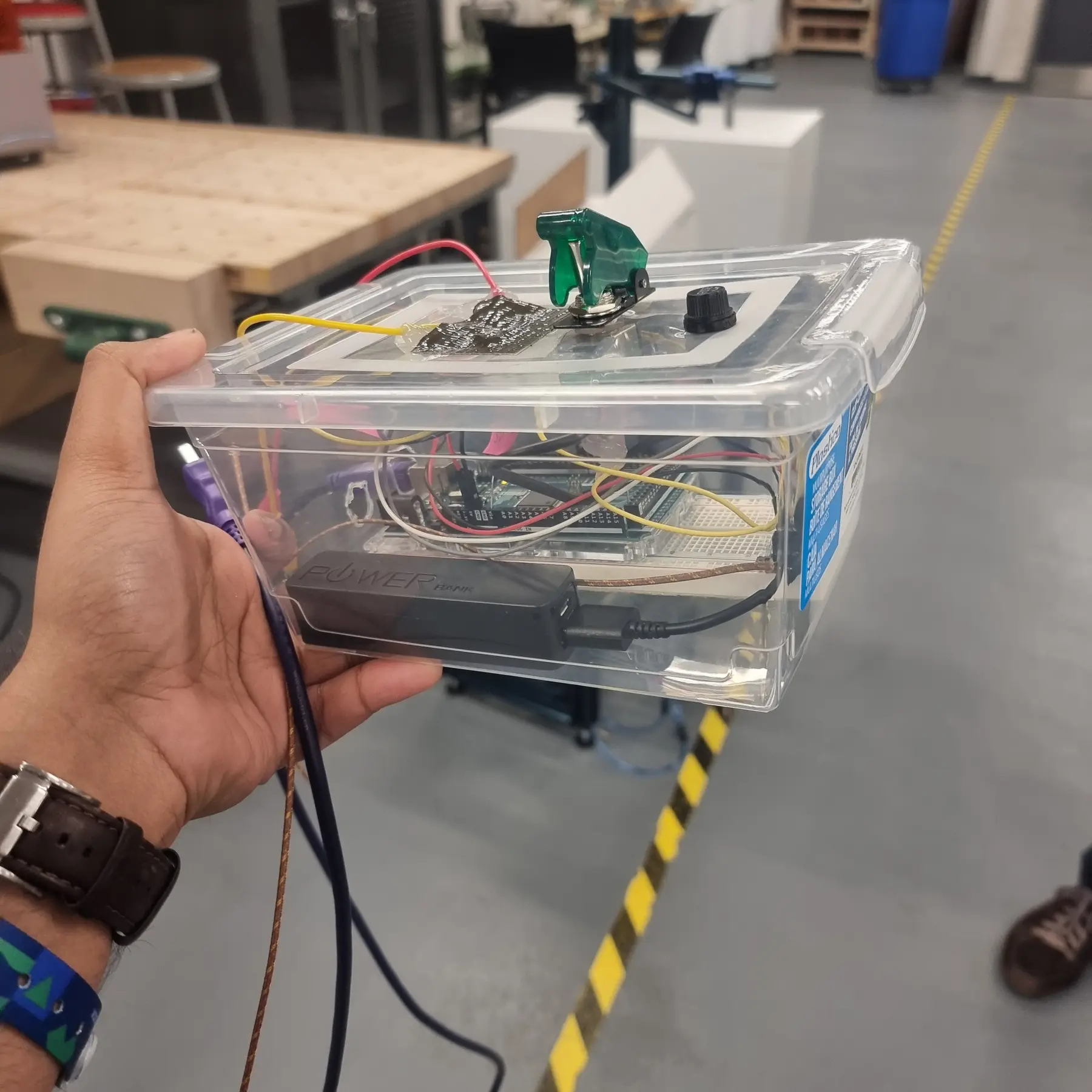
Igniter instrumentation test
The earliest confirmed test of the team's own hardware in the surviving archive used a custom acquisition box. Processed data reported a 1,368 °C peak and about 9.17 seconds above 1,000 °C.
Test summary and data plot - 2021 · Borealis development
-
Borealis test cancelled
A Combustion Dynamics test scheduled for November 21 was cancelled. The archive does not identify its configuration. The 2020–21 review still listed fabrication, calibration, cold flow and hot fire as future work.
-
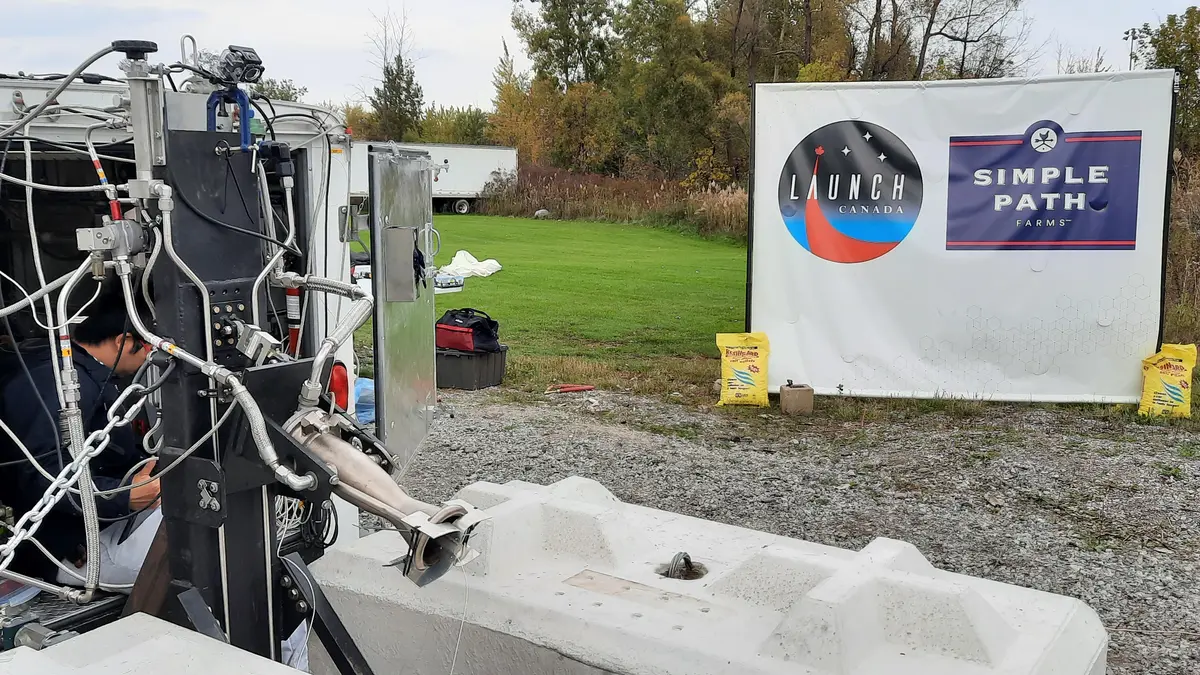
Launch Canada LR-101 test assist
RPG members volunteered on assembly and test operations for Launch Canada's LR-101 firing in Welland. Launch Canada's video reports a 35 s burn and approximately 4.45 kN peak thrust. The LR-101 was not a MACH engine.
Video and event note -
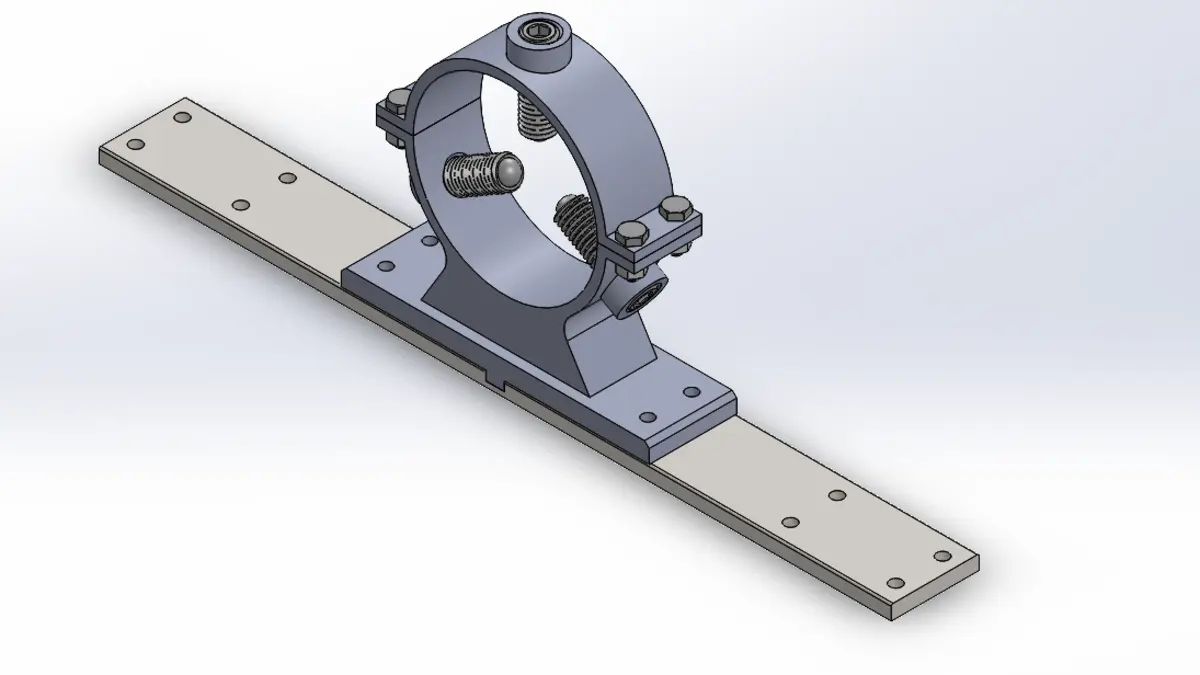
SLA resin engine test program
RPG proposed firing a small SLA resin engine with propane, compressed air and a hobby-motor igniter. A September presentation said the engines still had to be printed; the October SOP has no results entries, and no firing data or video was found.
Design and evidence limits - 2020 · Borealis
-
Borealis is named
The Borealis name appears in project requirements dated September 10. It identified the approximately 1.76 kN ethanol and nitrous oxide research-engine concept.
-
Inconel engine and cold-flow proposal
The Launch Canada 2020 proposal specified a one-piece Inconel 718 chamber, injector and cooling system: 1.5 kN thrust, 500 psi chamber pressure, six helical cooling channels, 50 film-cooling holes and 30 injector orifices. An August 2020 cold flow at 750 psi injector pressure was planned; no completed flow was found.
- 2019 · Liquid-engine design
-
Ethanol and nitrous oxide CDR
The proof-of-concept design targeted 1.56 kN thrust, a 500 psi chamber, a 10 s burn, 750 psi run tanks and 0.795 kg/s total propellant flow. It used an 80-channel impinging injector with regenerative and film cooling. The CDR placed component flow, cold-flow and hot-fire testing in future work.
- 2018 · RPG begins
-
First liquid-engine project brief
The brief required a liquid engine for a vehicle reaching at least 10,000 ft, an 8 in fuselage limit and remote operation behind a blast shield. It proposed a low-cost small-scale engine before a full-scale version; cold-flow and hot-fire work scheduled for January 2019 was not confirmed as completed.
-
Ryerson Propulsion Group begins
The March 2019 CDR says RPG was founded in June 2018, and the January 2022 Launch Canada proposal also gives 2018. Later team reports give 2017, but no contemporary 2017 record was found.